
The 'Default Mode' Advantage: Why Personalized Audio Stories are the Scientific Secret to Protecting Your Child’s Brain Space
•Written by AudioFables Team
Key Takeaways:
► The Default Mode Network (DMN) is essential for creativity, empathy, and self-reflection.
► Passive screen time suppresses this vital brain network, leading to overstimulation.
► Audio stories act as a 'DMN activator' by forcing the brain to create internal visualizations.
► Personalization triggers self-referential processing, helping children build a stronger internal narrative.
As we move into 2026, the parenting landscape is shifting. We are seeing a massive surge in 'Analog Living'—a movement dedicated to reclaiming childhood from the relentless pull of high-stimulus digital content. At the heart of this movement is a concept neuroscientists call 'Brain Space.' It’s that quiet, internal territory where your child’s imagination lives, and it is currently under threat from the 'Task-Positive' loop of scrolling and fast-paced videos.
The Default Mode Network is a specialized group of brain regions that becomes active when we aren't focused on the outside world. It’s the brain’s 'home base' for daydreaming, reflecting on the past, and imagining the future. For children, the DMN is where empathy is born and where they develop their sense of self. However, research shows that passive screen time keeps children in a high-alert state that effectively shuts the DMN down. This suppression is a major contributor to what many call 'brain rot'—a state of decreased focus and weakened internal narrative.
Turn your child's favorite characters into personalized audio adventures. Sign up for free and start your story today!
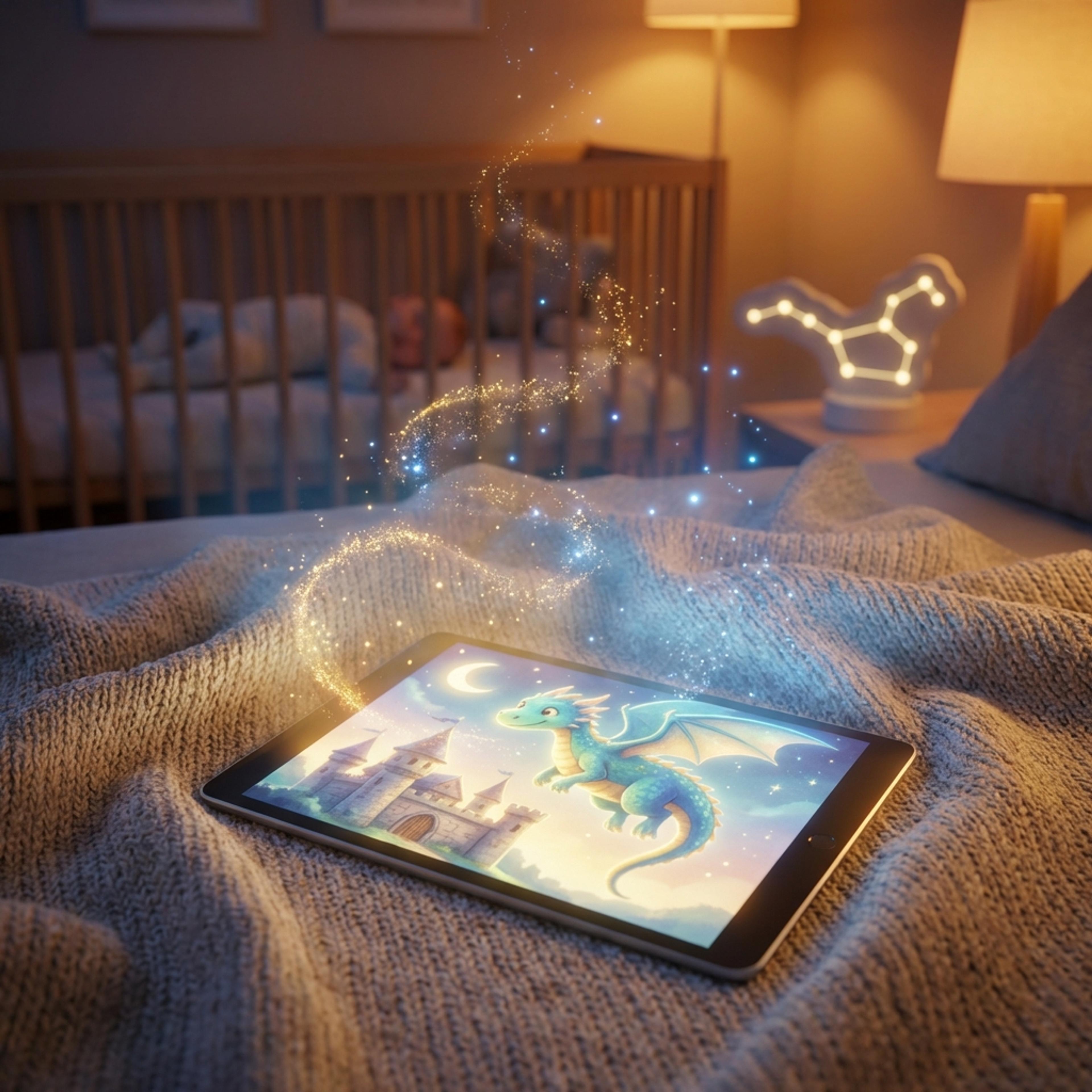
Get Started FreeUnlike tablets or television, which provide ready-made images, audio stories lack visual input. This 'lack' is actually a superpower. It forces the child’s brain to engage in Internal Visualization. Their mind must work to fill in the blanks, painting the dragon’s scales or the hero’s cape. This process is essentially exercise for the DMN. By transitioning , you are literally rebuilding your child’s attention span.
While tools like the Yoto Player or Toniebox are great for removing screens, they often rely on static, pre-recorded content. AudioFables takes this a step further through personalization. When a story includes your child’s name, their favorite toy, or a specific challenge they are facing, it triggers 'Self-Referential Processing.' This is the DMN’s primary job: making sense of information in relation to oneself. This makes the child the of their own life, building mental resilience and a strong sense of identity.
By choosing personalized audio over generic alternatives, you aren't just entertaining your child; you are protecting their brain space. You are giving them the tools to navigate a high-stim world with a calm, focused, and creative mind. It’s time to trade the dopamine loops of the screen for the deep, restorative power of the Default Mode Network.