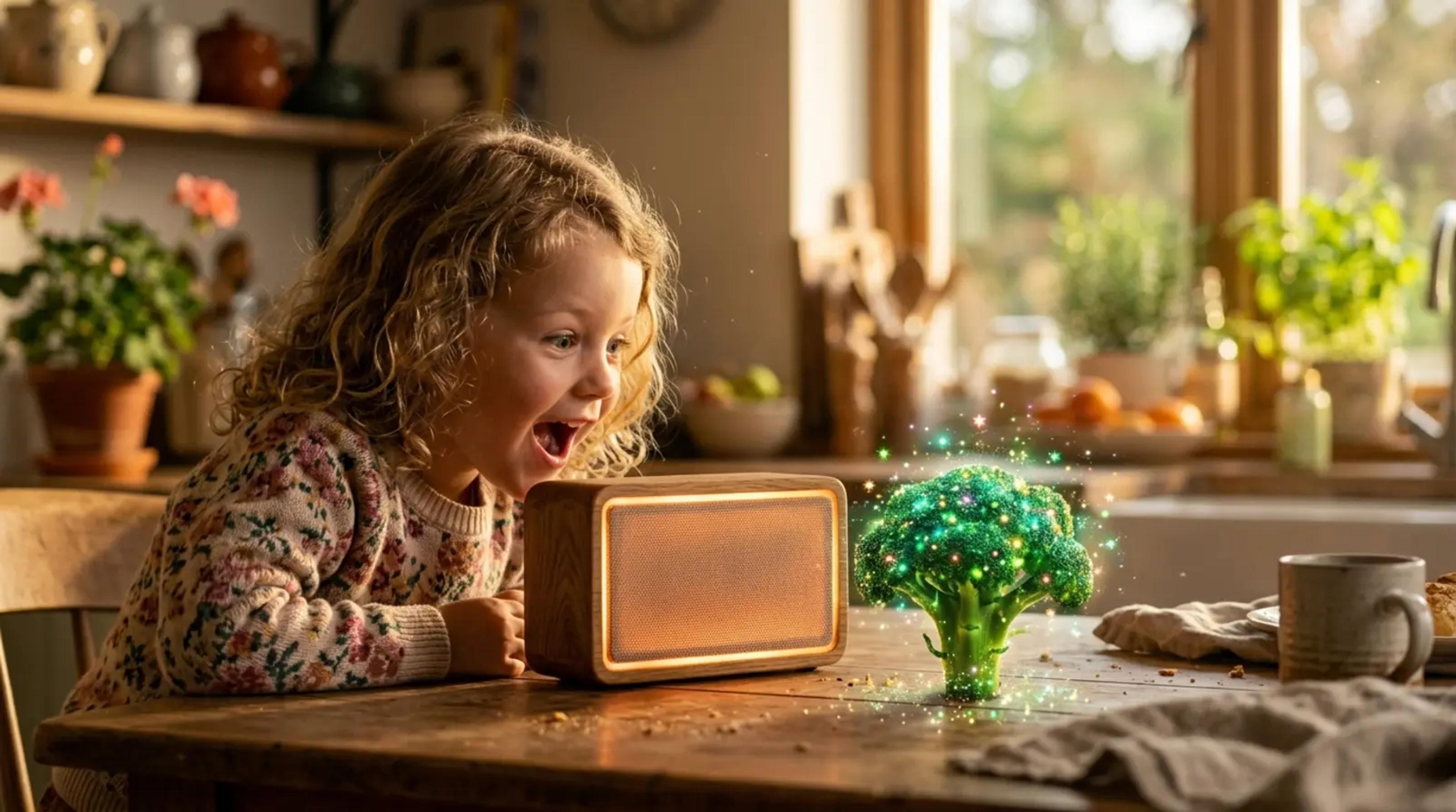
The 'Flavor Hero' Framework: How Personalized Audio Stories Turn Picky Eating into a Sensory Adventure
•Written by AudioFables Team
Key Takeaways:
► Picky eating is often 'food neophobia,' a fear of the unknown that peaks between ages 2 and 6.
► Narrative modeling allows children to mentally rehearse eating through a trusted hero.
► Personalization turns 'scary' textures into 'power-ups' within a heroic quest.
► AudioFables bridges the gap by making your child's favorite toy the protagonist of the mealtime mission.
If you’ve ever felt the rising heat of a mealtime power struggle, you aren't alone. Picky eating, or food neophobia, affects up to 35% of children. It isn't just 'bad behavior'; it’s a biological survival mechanism where the brain flags new textures and smells as potential threats. But what if we could lower that survival response using the power of story?
Research suggests that 'narrative modeling' is one of the most effective non-pressured ways to encourage food exploration. When a child hears about a hero they trust—like their favorite stuffed animal or even themselves—trying a new food, they experience vicarious reinforcement. They mentally rehearse the crunch, the taste, and the swallow without the immediate pressure of the plate in front of them.
Turn your child's favorite characters into personalized audio adventures. Sign up for free and start your story today!
Get Started FreeAt AudioFables, we’ve developed a simple framework to help you use personalized stories to transform mealtime. Here is how you can apply it today:
While platforms like Toniebox or Yoto offer wonderful libraries, they can’t tell a story about your child and the specific peas sitting on their plate right now. Generic AI tools like ChatGPT lack the required to build a real trust bond. AudioFables allows you to input the exact challenge and character, creating a bespoke behavioral tool disguised as a bedtime story.
By shifting the focus from the kitchen table to the world of imagination, we lower mealtime cortisol and invite curiosity back to the plate. Ready to start your first flavor quest? Check out our and turn tonight's dinner into a win.