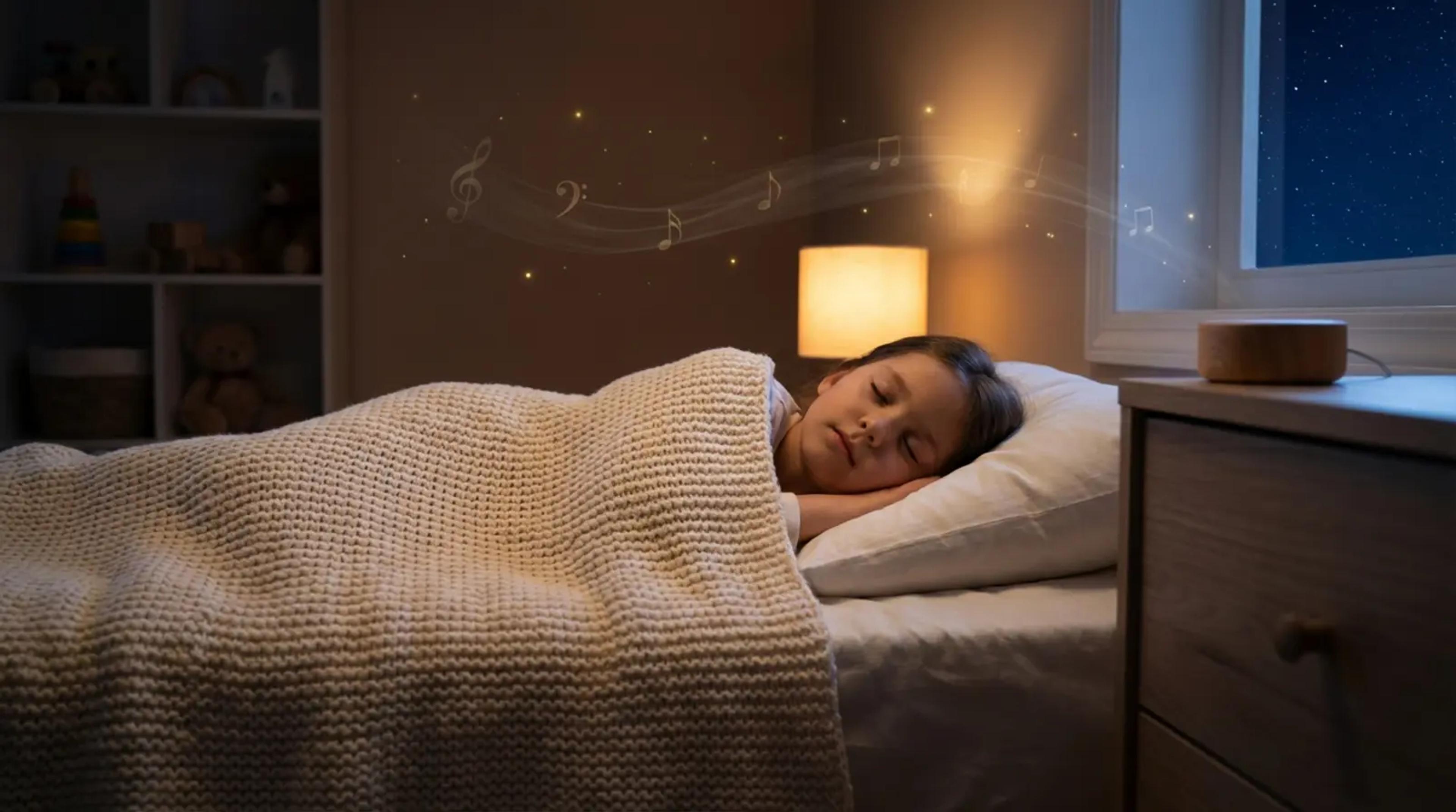
Calm Nights, Happy Hearts: How Personalized Audio Stories Support Emotional Regulation and Better Sleep
•Written by AudioFables Team
Key Takeaways:
► Personalized audio stories act as a gentle bridge from high-energy screen time to restful sleep.
► Hearing their own name in a story helps children feel seen and more receptive to emotional regulation techniques.
► Audio formats reduce visual overstimulation, allowing the brain to produce natural melatonin.
► Embedded coping tools like guided breathing help kids manage 'big emotions' in real-time.
For many parents, the transition from screens to sleep is the hardest part of the day. Screens provide high-octane stimulation that can leave a child's brain 'wired' long after the tablet is turned off. This often leads to meltdowns, bedtime battles, and difficulty settling down. But what if you could replace that blue light with a medium that actually builds emotional resilience?
Personalized audio stories, like those created by AudioFables, are more than just entertainment. They utilize narrative therapy techniques to help children process their day. When a character in a story faces a challenge similar to your child's—and uses their name—it creates a powerful moment of connection. By labeling feelings like frustration or anxiety within the narrative, children learn to recognize these 'big emotions' in themselves.
According to research on child development, children need a 'wind-down' period where their sensory input is minimized. Audio stories provide an immersive experience that sparks the imagination without the dopamine spikes associated with fast-paced video content. This helps the nervous system transition from a state of 'alert' to a state of 'rest.'