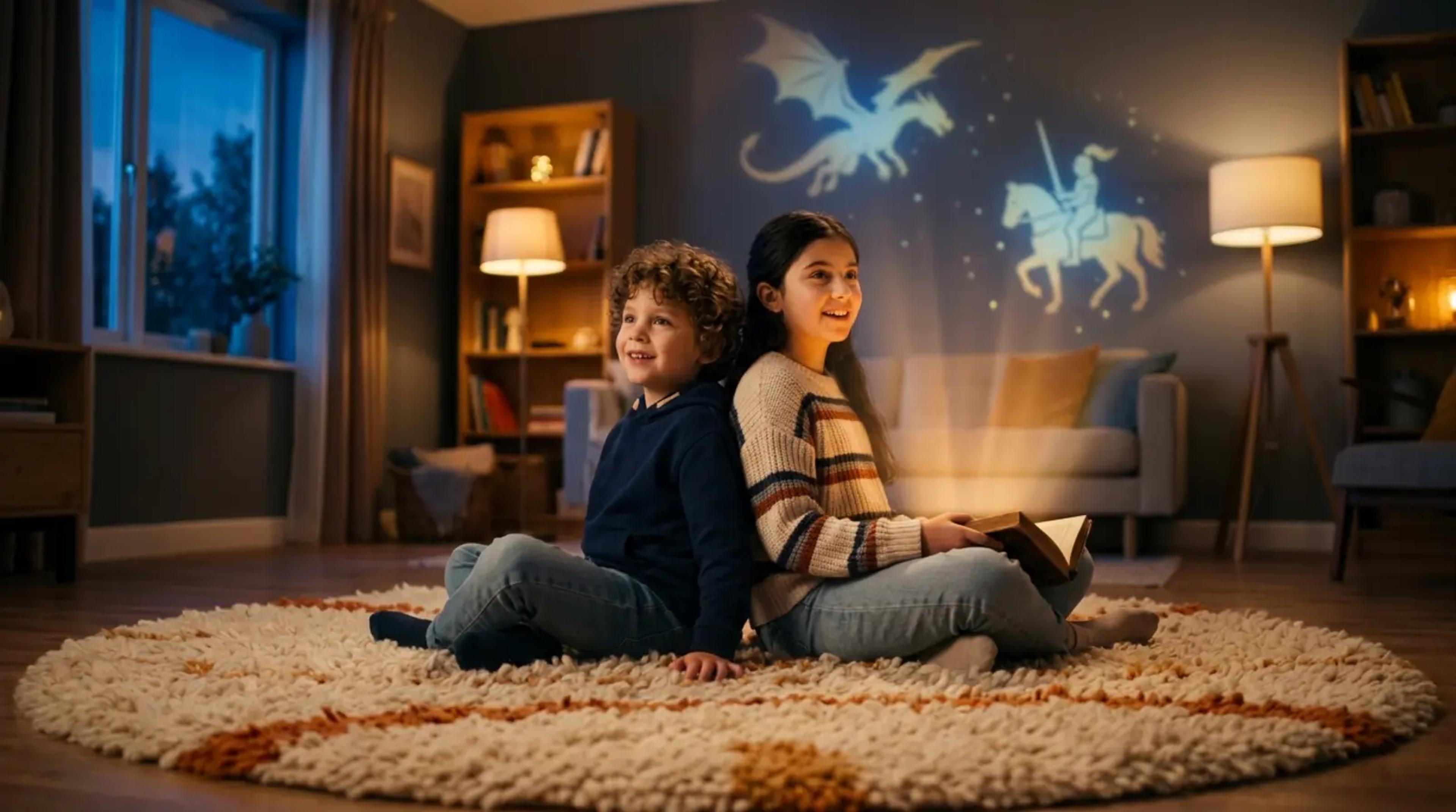
The 'Sibling Synergy' Strategy: How Personalized Audio Stories Turn Daily Friction into Collaborative Hero Quests
•Written by AudioFables Team
Key Takeaways:
► Sibling rivalry is a natural developmental stage, but fixed-protagonist media often inadvertently fuels the fire.
► The 'Sibling Synergy' strategy uses multi-protagonist social narratives to model cooperation.
► Personalized audio allows siblings to share the spotlight, reducing 'equity' friction.
► Research shows that shared imaginative play increases empathy and reduces aggressive behavior.
If you’ve ever felt like a referee in a never-ending boxing match, you aren’t alone. Statistics show that siblings between the ages of 3 and 7 clash up to 3.5 times per hour. In the era of 'Sturdy Leadership,' popularized by experts like Dr. Becky Kennedy, our job isn't just to stop the fight—it's to set firm boundaries while maintaining a deep emotional connection. But how do we bridge the gap between a heated argument over a toy and the peaceful cooperation we dream of?
Traditional media—whether it's a Toniebox or a Yoto Player—often relies on pre-recorded content with a single protagonist. When siblings listen together, they often fight over who 'is' the main character. This 'equity' issue is a major trigger for friction. Most screen-free alternatives focus on individual relaxation, but they miss the opportunity for active, collaborative imaginative play.
Turn your child's favorite characters into personalized audio adventures. Sign up for free and start your story today!
Get Started FreeThe 'Sibling Synergy' strategy leverages AI to create multi-protagonist stories where your children are cast as a 'Hero Team.' By using AudioFables to 'Build a Cast,' you can create a narrative where 'Brave Leo' and 'Creative Maya' must use their unique, complementary strengths to solve a puzzle. This isn't just entertainment; it's a designed to model behavioral cooperation.
1. Identify the Friction: Is it sharing? Is it listening? Use these real-world challenges as the 'villain' or the 'obstacle' in the story.
2. Create the Hero Team: In AudioFables, add both children as protagonists. Assign them roles that highlight their real-world strengths.
3. The Collaborative Quest: Set the story in a world they love. Maybe they are space explorers who can only launch their ship if they work together to sequence the 'Cooperation Crystals.'
4. The Repair Ritual: If a fight happens during the day, use a personalized story as a to reconnect before bed.
By shifting from passive listening to active hero-work, you aren't just giving them a story; you're giving them a blueprint for how to be a team. In a world of screens that isolate, personalized audio creates a shared imaginative space where siblings can finally see each other as allies instead of rivals.