
The ‘Social Battery’ Recharge: Why Personalized Audio Stories are the Ultimate Screen-Free Decompression
•Written by AudioFables Team
Key Takeaways:
► Modern schools drain a child's 'social battery' through constant collaboration and sensory input.
► 'After-School Restraint Collapse' is a physiological response to being overstimulated and 'masking' all day.
► Screens often worsen dysregulation by keeping the brain in a high-arousal, dopamine-seeking loop.
► Personalized audio stories act as a low-stimulation 'cognitive bridge' to help kids transition to a regulated home state.
You know the scene: your child walks through the front door after a long day of school, and within minutes, the smallest request—like hanging up a coat—triggers a full-scale meltdown. To the outside observer, it looks like a tantrum. To the informed parent, it’s a clear sign of a depleted social battery. This phenomenon, often called After-School Restraint Collapse, occurs when children spend their entire day following rules, navigating social hierarchies, and processing loud environments. By the time they reach their 'safe space' at home, they simply have nothing left to give.
It is incredibly tempting to hand over a tablet during this volatile hour. On the surface, it seems to work; the child goes quiet, mesmerized by the glowing screen. However, research into 'Device Dysregulation' suggests this is a temporary fix with a heavy price. Fast-paced visuals and dopamine-inducing algorithms keep the nervous system in a state of high arousal. When the screen finally goes off, the 'crash' is often more intense than the initial meltdown. This is why many parents are seeking a dopamine reset that actually allows the brain to rest.
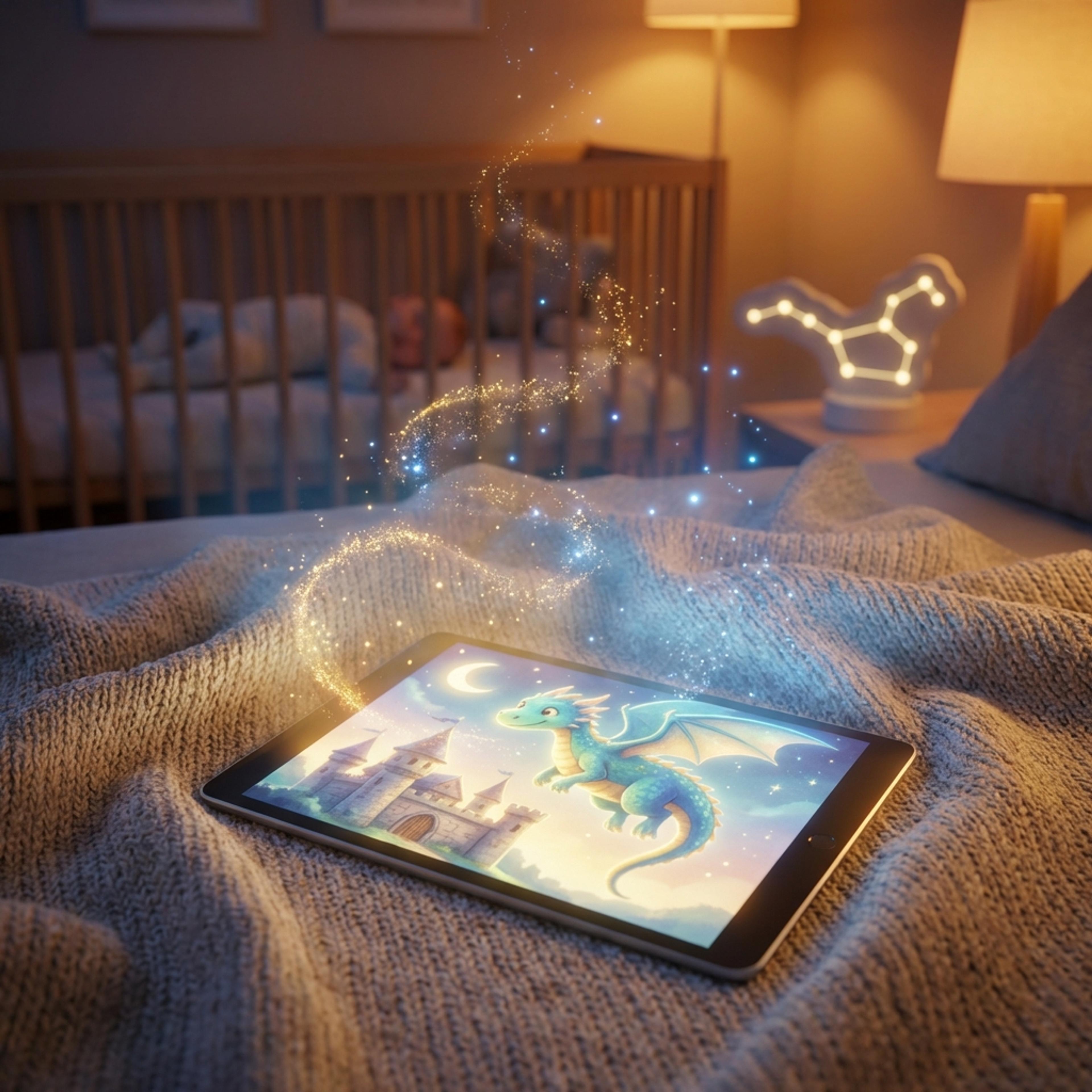
Turn your child's favorite characters into personalized audio adventures. Sign up for free and start your story today!
Get Started FreeAudio storytelling offers a 'low-arousal' alternative. Unlike video, audio requires the brain to generate its own imagery—a process that activates the 'default mode network.' This is the same part of the brain used for daydreaming and emotional processing. It allows a child to decompress while remaining mentally engaged in a calm, controlled way. This is the core of the : creating a low-stimulation sanctuary where the nervous system can finally downshift.
At AudioFables, we take this a step further. A generic story is helpful, but a personalized story is transformative. By including your child’s name, their favorite , or even a specific challenge they faced that day, the story becomes a psychological anchor. It validates their experience and provides a safe narrative space to process their feelings. It’s not just entertainment; it’s a tool for emotional regulation.
Next time your child comes home overstimulated, try skipping the TV. Instead, guide them to a cozy corner with a personalized story. You’ll likely find that their social battery doesn't just stop draining—it actually starts to refill.