The Focus Factor: Rebuilding Your Child’s Attention Span with Personalized Audio
•Written by AudioFables Team
Key Takeaways:
► Audio stories act as a low-stimulus medium that trains sustained listening.
► Unlike short-form video, audio narratives avoid rapid dopamine spikes.
► Personalized stories capture interest instantly, reducing 'attentional blink' lapses.
In an era of 15-second viral videos and infinite scrolling, parents are increasingly noticing a change in their children: the ability to sit still and focus is shrinking. It’s not just your imagination. The "digital age" has introduced a rapid-reward cycle that trains young brains to expect constant visual stimulation. But there is a powerful, often overlooked tool that can help reverse this trend: personalized audio storytelling.
Visual media, especially short-form content, demands very little from a child's imagination. It provides the setting, the action, and the emotion all at once. This passivity can lead to what researchers call a shortened attention span. When we shift from passive screen time to active imagination, we require the brain to work differently. Visuals create a "sugar rush" of dopamine, whereas audio builds a slow-burning, sustainable focus.
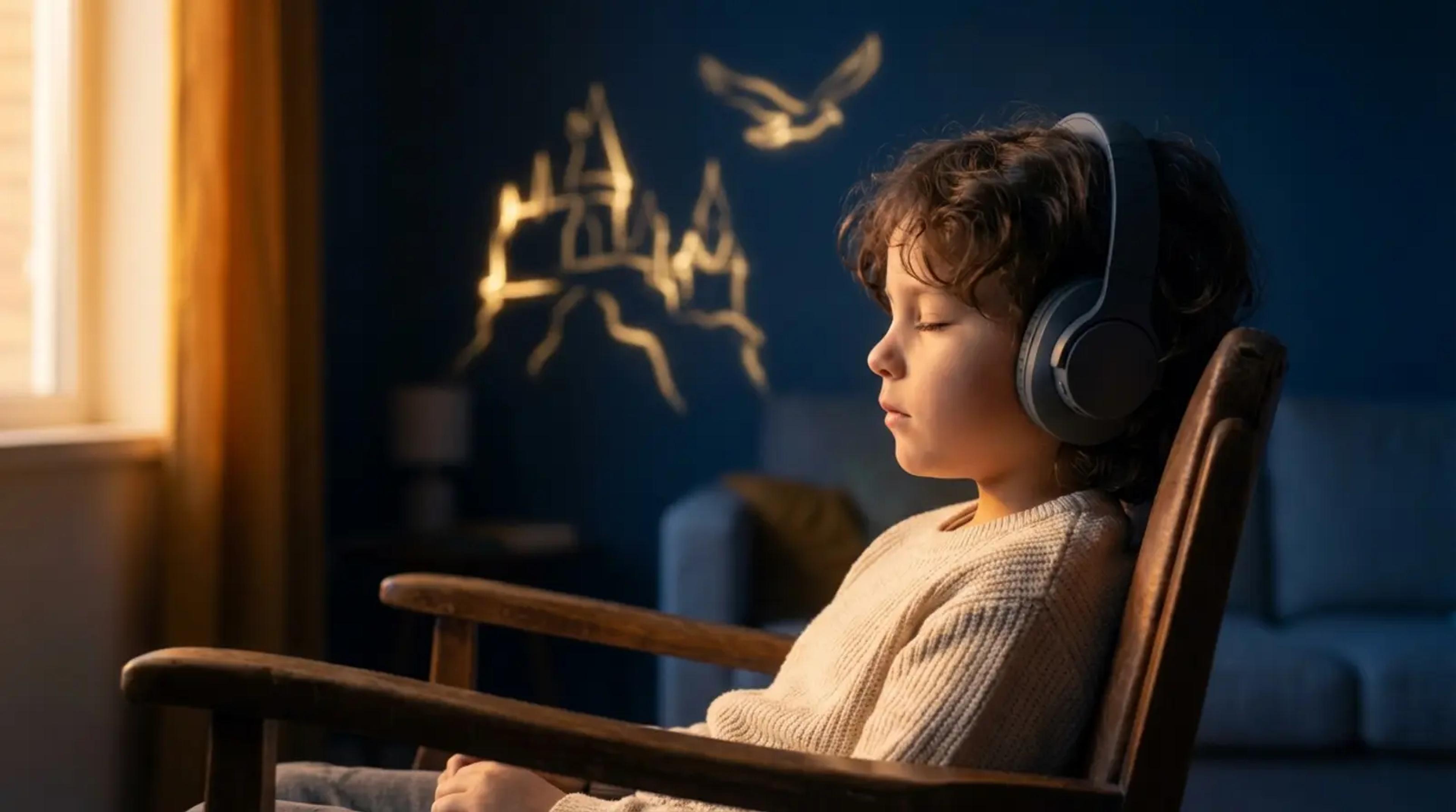
Audio stories strip away the visual noise. Without flashing lights or quick cuts, a child must rely on "active listening." They have to visualize the dragon, the castle, or the spaceship in their own mind. This mental effort strengthens the neural pathways associated with attentional control. It teaches the brain to hold onto a thought or a narrative thread for minutes, rather than seconds.

Generic audiobooks are great, but they sometimes fail to grab a distracted child's attention initially. This is where AI-driven personalization changes the game. When a story features the child’s name, their favorite toy, or their pet, engagement skyrockets. This is known as the . It anchors the child’s attention because the stakes feel personal. By using AudioFables to craft stories specifically for them, you bridge the gap between high-stimulation screens and the deep focus required for listening.
Rebuilding attention takes time, but you can start tonight: