The Bedtime Battle Cure: How Personalized Audio Stories Bridge the Gap to Independent Sleep
•Written by AudioFables Team
Key Takeaways:
► Personalized storytelling reduces separation anxiety by making the child the hero.
► Over 36% of parents struggle with the 'literacy gap' due to bedtime burnout.
► Independent sleep is fostered through emotional anchors and 'Hero Sanctuaries'.
► Unlike static players, AI-personalized audio adapts to a child's specific fears and interests.
The sun goes down, the pajamas are on, and then it begins: the negotiation. 'One more water,' 'Don't leave yet,' or the dreaded 'I'm scared.' If you feel exhausted by the nightly bedtime battle, you aren't alone. Recent data from the C.S. Mott Children’s Hospital shows that 1 in 4 parents struggle with children who simply cannot fall asleep independently. This leads to what we call 'bedtime burnout'—a state where parents are too drained to enjoy the evening ritual.
In Germany, the 'Vorlesemonitor 2024' highlighted a startling trend: 36% of parents rarely or never read to their children. The reason isn't a lack of love; it's a lack of bandwidth. Between work, chores, and the mental load of parenting, finding the energy for a 20-minute story can feel impossible. This creates a literacy gap that affects long-term development. This is where personalized audio stories serve as a bridge, maintaining the magic of storytelling even when your tank is empty.

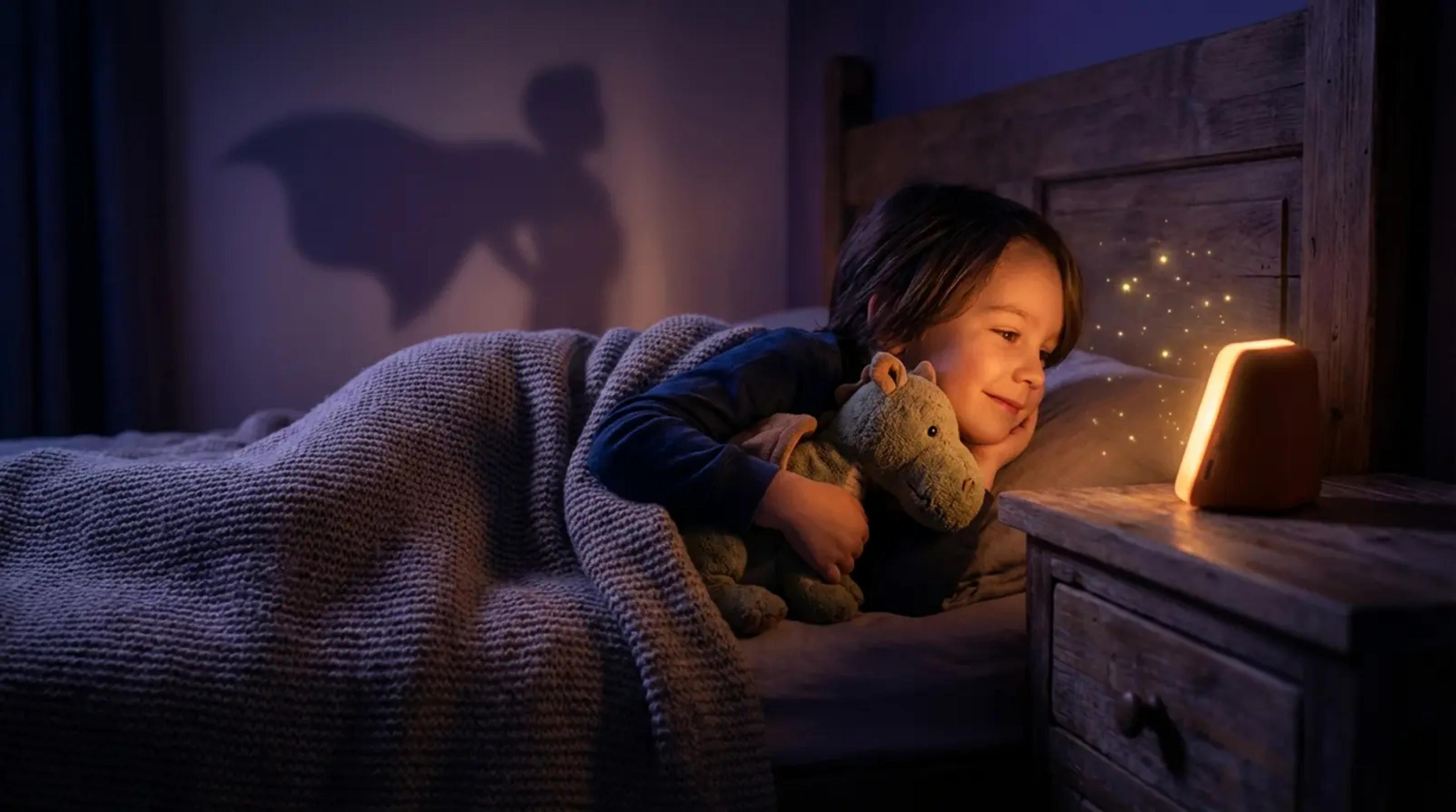
Why do children cling to us at night? Often, it's separation anxiety. While generic sleep apps like Moshi Sleep offer calming sounds, they lack the 'self-referencing' power of a personalized tale. When a child hears their own name and their favorite stuffed animal featured as the protagonist, a psychological shift occurs. They transition from a passive listener to an active hero.
By transforming the bedroom into a 'Hero’s Sanctuary,' the child feels empowered rather than abandoned. This emotional anchor is the key to independent sleep. You can learn more about how in fostering this connection.
Many parents turn to Tonieboxes or Yoto Players for screen-free entertainment. While great, these tools rely on static content. AudioFables takes it a step further by allowing you to incorporate your child's specific fears or their favorite into the narrative. This makes the transition to sleep a gentle, interest-led process that respects the principles of digital minimalism and gentle parenting.