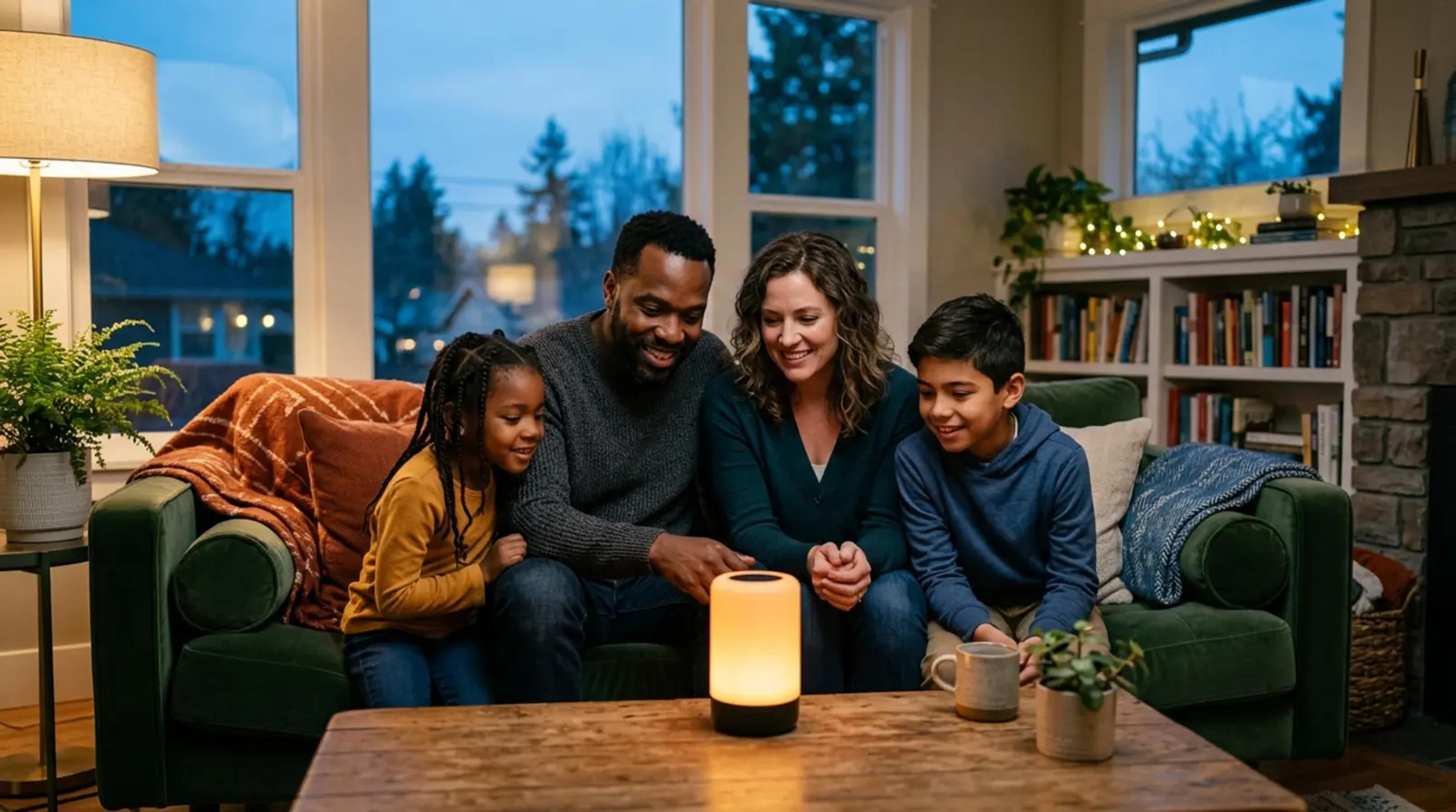
The Blended-Lore Ritual: How Personalized Audio Stories Build an Instant Shared Identity for Step-Families
•Written by AudioFables Team
Key Takeaways:
► Blended families often face a 'Belonging Gap' due to a lack of shared history.
► Personalized audio stories create a 'neutral third space' for bonding without emotional pressure.
► Casting step-parents as 'Guardians' flips the negative 'evil step-parent' trope found in traditional media.
► Narrative-led bonding helps integrate families in months rather than years.
Integrating a blended family is a marathon, not a sprint. Research suggests it typically takes between two to five years for a step-family to feel like a cohesive unit. The primary hurdle? The 'Belonging Gap.' Biological families have years of 'inside jokes' and shared history—what sociologists call 'family lore.' For a new step-child, entering this environment can feel like joining a movie halfway through; they don't know the plot, and they don't feel like a lead character.
In 2025, parenting trends are moving toward 'Slow Blending.' This approach respects the child's pace and avoids forced intimacy. Personalized audio storytelling is the perfect tool for this. Unlike a movie where the child is a passive observer, or a board game which might trigger competition, an audio story acts as a neutral third space. It allows children to explore their new family dynamics through the safety of fiction. By using sibling synergy strategies, you can cast biological and step-siblings as a unified team of heroes.
Turn your child's favorite characters into personalized audio adventures. Sign up for free and start your story today!
Get Started FreeTraditional children's literature is, unfortunately, full of 'evil' step-parents. From Cinderella to Hansel & Gretel, the narrative often reinforces the idea that a new parent is an intruder. AudioFables allows you to reclaim this narrative. Instead of an outsider, the step-parent can be cast as the 'Wise Guardian' or the 'Master Navigator' who helps the child-hero on their quest. This subtle shift in roles can lower a child's natural defenses and build a sense of shared identity.
1. The Collaborative Quest: Create a story where the child and their new step-sibling must solve a puzzle together. This builds 'us-vs-the-problem' thinking.
2. The Transition Anchor: Use stories to bridge the gap between homes. If the child is struggling with 'switch day,' a personalized story can act as a that travels with them.
3. Repair the Rift: If there has been a conflict, use a to model how the characters (representing the family members) apologize and move forward.
By making the 'Blended-Lore' ritual a part of your bedtime routine, you aren't just telling stories; you are architecting a new family history. You are giving your children a sense of belonging that generic content simply cannot provide.