The 'Hero Reflection' Method: Using Personalized Stories to End the Lecture Cycle
•Written by AudioFables Team
Key Takeaways:
► Lectures often trigger 'shame spirals' and defensive resistance in children.
► The 'Hero Reflection' method uses psychological distance to help kids process behavior objectively.
► Personalized audio stories turn a child's favorite toy into a relatable mentor.
► Unlike generic apps, AudioFables provides 'just-in-time' support for specific behavioral challenges.
If you’ve ever found yourself giving the third lecture of the morning about sharing—only to be met with glazed eyes or a mounting meltdown—you aren’t alone. Many parents in 2026 are experiencing 'negotiation burnout.' The constant verbal back-and-forth of early gentle parenting iterations has left many of us exhausted. We want to set boundaries and build empathy, but our words often feel like they are hitting a brick wall. This is where the 'Hero Reflection' method changes the game.
When we address a child's behavior directly during a conflict, their nervous system often goes into a defensive state. This is especially true for neurodivergent children or those sensitive to correction. Research into 'Psychological Distance' shows that children process difficult concepts—like patience, sharing, or anger—much more effectively when they see those behaviors mirrored in a character they love. By moving the conflict from the child to a 'hero,' we bypass the shame and allow the child to observe and reflect safely.
Turn your child's favorite characters into personalized audio adventures. Sign up for free and start your story today!
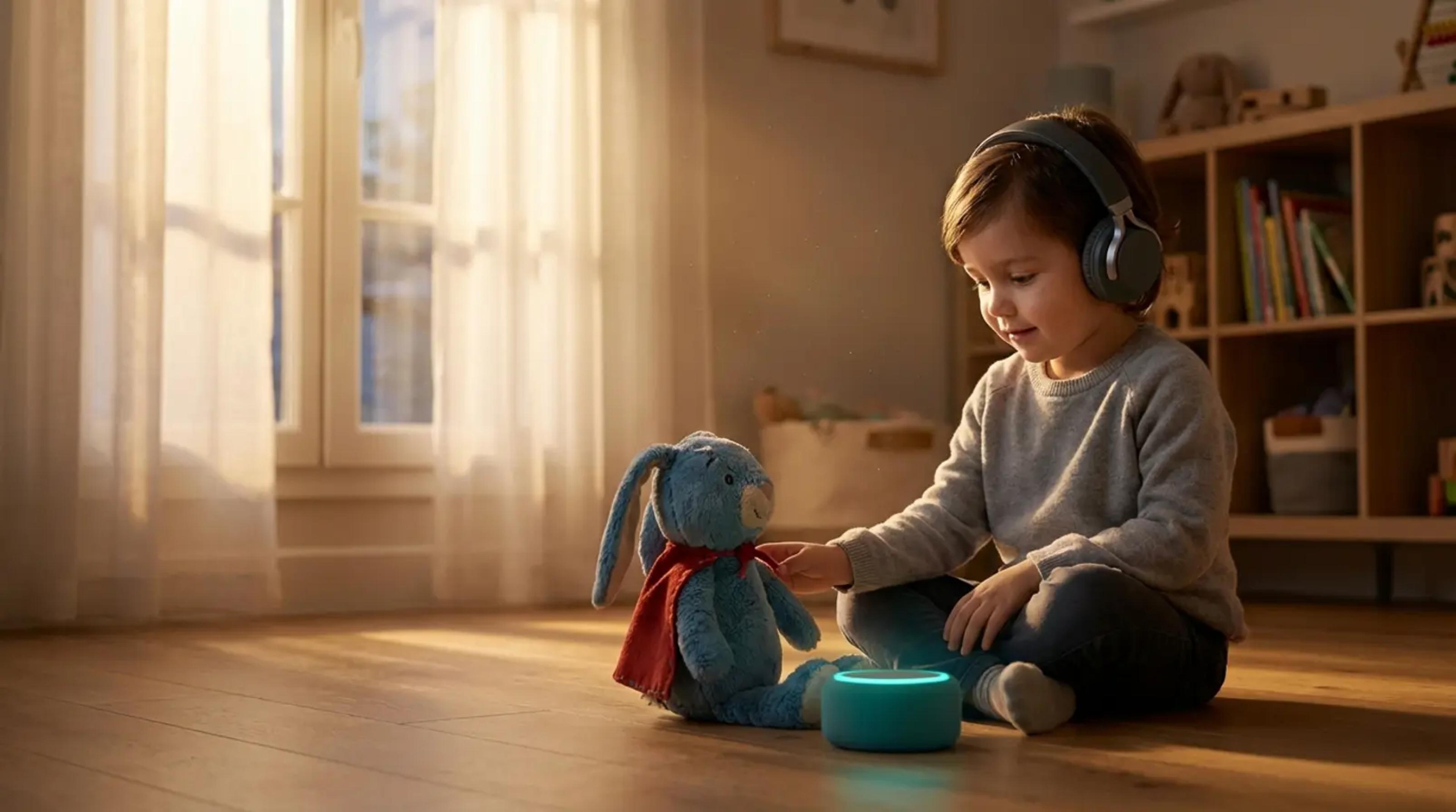
Get Started FreeTraditional stories in apps like Moshi or Calm are wonderful for relaxation, but they are generic. They don't know that your child’s best friend is a tattered blue rabbit named 'Barnaby.' The Hero Reflection method works best when the protagonist is a that the child is emotionally bonded with. When Barnaby the Rabbit faces a challenge similar to the one your child faced today, 'Narrative Transportation' takes over. Your child isn't being lectured; they are helping their hero solve a problem.
Unlike physical players like the Toniebox, which require you to record your own content or buy pre-set cards, AudioFables allows you to generate a story instantly. If your child struggled with a playground transition today, you can create a story where their favorite hero navigates that exact scenario. This helps children build natural empathy by seeing the consequences of actions through a lens of love rather than a lens of authority.
By shifting from 'telling' to 'storying,' you aren't just ending the lecture cycle; you are giving your child the internal script they need to handle the world with resilience. This is the ultimate in action.