The 'Internal Frame Rate' Secret: Why Personalized Audio Stories are the Best Antidote to the 'Post-Screen Meltdown' Cycle
•Written by AudioFables Team
Key Takeaways:
► Modern screens force a child's brain to sync with external 'cut rates,' leading to over-arousal.
► The 'post-screen meltdown' is caused by a sudden stimulus drop when the real world feels too slow.
► Audio stories allow children to set their own 'Internal Frame Rate' through mental imagery.
► Personalization triggers oxytocin, which acts as a physiological brake on dopamine-driven overstimulation.
You know the feeling. You tell your child it’s time to turn off the tablet, and within seconds, the peaceful living room transforms into a battlefield. This isn't just 'bad behavior' or a lack of discipline. It is a physiological reaction to a phenomenon researchers are now calling the 'Internal Frame Rate' mismatch.
Modern children's media is designed with incredibly high 'cut rates'—rapid scene changes that happen every few seconds. This forces a child's nervous system to synchronize with an external pace. Their brain is essentially 'overclocked' by the screen. When the device is switched off, the real world—which moves at a natural, human pace—suddenly feels painfully slow and boring. This dopamine reset is the primary driver of the post-screen meltdown.
Turn your child's favorite characters into personalized audio adventures. Sign up for free and start your story today!
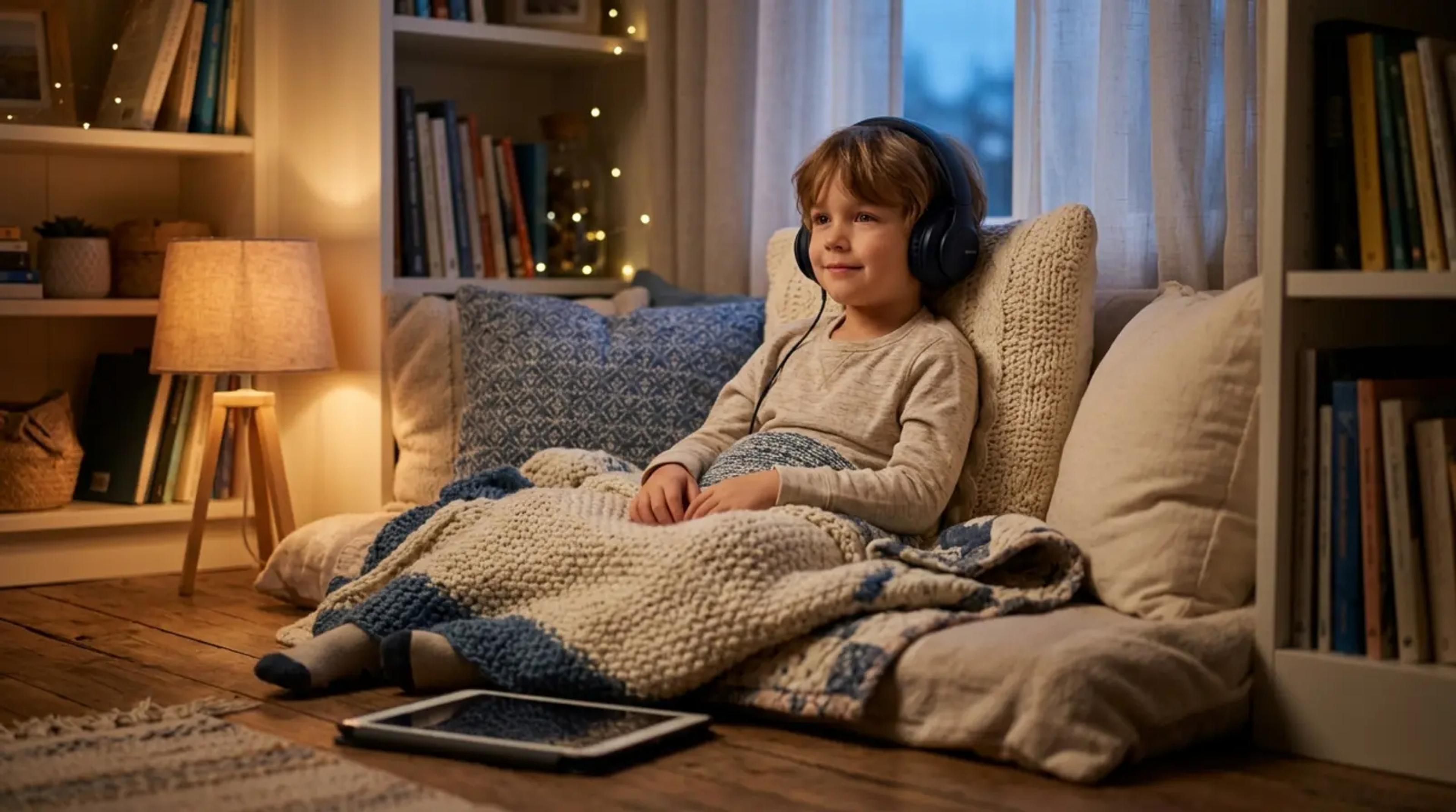
Get Started FreeUnlike video, auditory storytelling requires 'self-generated mental imagery.' When your child listens to a story, their brain has to build the 'Mental Movie' itself. In this state, the child sets their own 'Internal Frame Rate.' They process information at a speed that matches their current nervous system capacity, rather than being dragged along by an algorithm.
This is why moving is so effective. It transitions the brain from a state of external control to a state of self-regulation.
While screen-free tools like the Toniebox or Yoto provide a great alternative, they often rely on static content. AudioFables takes it a step further. By weaving your child’s name, their favorite toys, and their own life challenges into the narrative, we trigger the release of oxytocin—the bonding hormone.
Oxytocin acts as a physiological 'brake' on the dopamine-driven overstimulation caused by screens. It signals to the nervous system that it is safe to slow down. This helps bridge the gap between the high-intensity digital world and the calm of the real world.
By using the , you aren't just entertaining your child; you are training their brain to self-regulate, strengthening their executive function, and finally ending the cycle of post-screen meltdowns for good.