The 'Internal Movie' Method: Why Auditory Visualization is the Secret to Rebuilding Your Child’s Working Memory
•Written by AudioFables Team
Key Takeaways:
► Auditory visualization acts as a 'top-down' cognitive workout for the brain.
► It helps rebuild working memory often weakened by rapid-fire visual media.
► Personalization lowers the cognitive entry barrier for mental imagery.
► Strong visualization skills are directly linked to higher future reading comprehension.
As parents in 2025, we’ve all felt that pang of guilt watching our children enter a 'zombie-like' trance in front of a tablet. It’s not just about the content; it’s about how the brain processes it. Research into 'digital brain rot' suggests that the high-dopamine, rapid-fire nature of short-form video is fundamentally changing how children focus. But there is a powerful antidote: the 'Internal Movie' method.
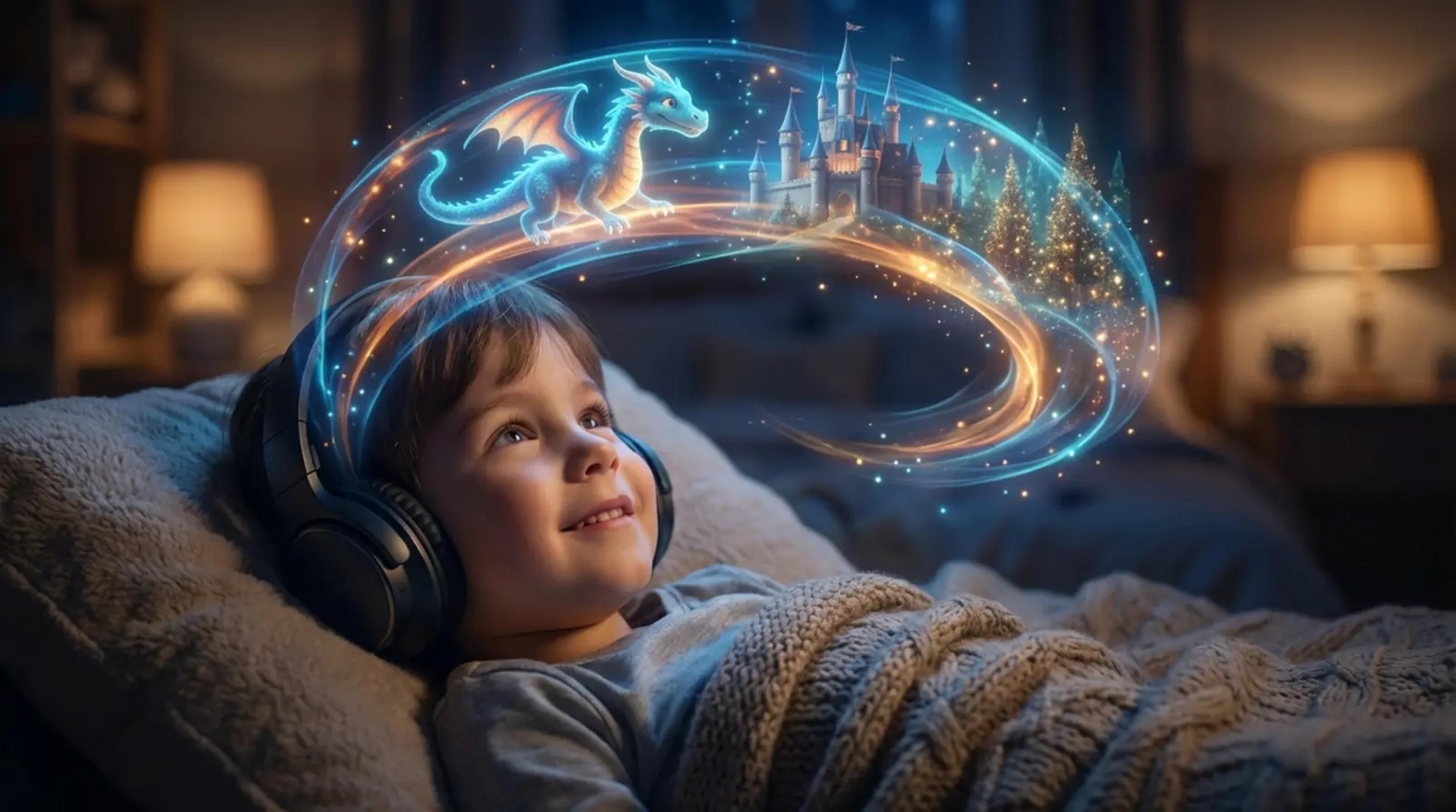
In cognitive science, there’s a massive difference between watching a video and listening to a story. Video is 'bottom-up' processing. The screen provides the colors, the movement, and the characters. The child’s brain is a passive recipient. Auditory visualization, however, is 'top-down' processing. When a child hears a story, their brain must actively construct the imagery. They have to 'cast' the characters, 'build' the sets, and 'direct' the action in their mind. This is what literacy experts call the 'Internal Movie'.
By moving from passive screen time to active imagination, you are essentially giving your child’s brain a specialized workout that strengthens the neural pathways responsible for focus and visual-spatial intelligence.
Turn your child's favorite characters into personalized audio adventures. Sign up for free and start your story today!
Get Started FreeWorking memory is often described as the brain’s 'sticky note.' It’s the ability to hold and manipulate information over short periods. When a child visualizes a story, they have to remember that the hero is wearing a blue hat, that the dragon is hiding behind the oak tree, and that the magic key is in the hero’s pocket. This constant retrieval and updating of mental images is a direct exercise for working memory.
This is why through audio is so effective. Unlike the passive consumption of TikTok or YouTube, audio stories require the brain to stay 'online' and engaged to keep the 'Internal Movie' running.
At AudioFables, we’ve seen that the biggest hurdle for children new to audio stories is the 'blank canvas' problem. If they aren't used to visualizing, starting from scratch can feel like a chore. This is where personalization changes the game. When the story features your child’s own favorite toy or their best friend, they already have a strong 'mental schema' (a pre-existing image) to work with. This 'emotional salience' lowers the cognitive load, making it much easier for them to start their Internal Movie.
1. Choose a quiet environment without visual distractions.
2. Use a personalized story where your child is the hero—this anchors their imagination.
3. After the story, ask a simple 'Internal Movie' question: 'What color was the dragon’s scales in your mind?' or 'How big was the castle you saw?'
By turning bedtime into a cognitive workout, you aren't just helping them sleep—you’re building the mental architecture they need for a lifetime of learning.