The 'Morning Mission' Strategy: How Personalized Audio Stories Gamify Routines
•Written by AudioFables Team
Key Takeaways:
► Morning chaos is often caused by 'transition anxiety' and underdeveloped executive functions.
► Gamification through audio triggers dopamine, making mundane tasks like brushing teeth feel rewarding.
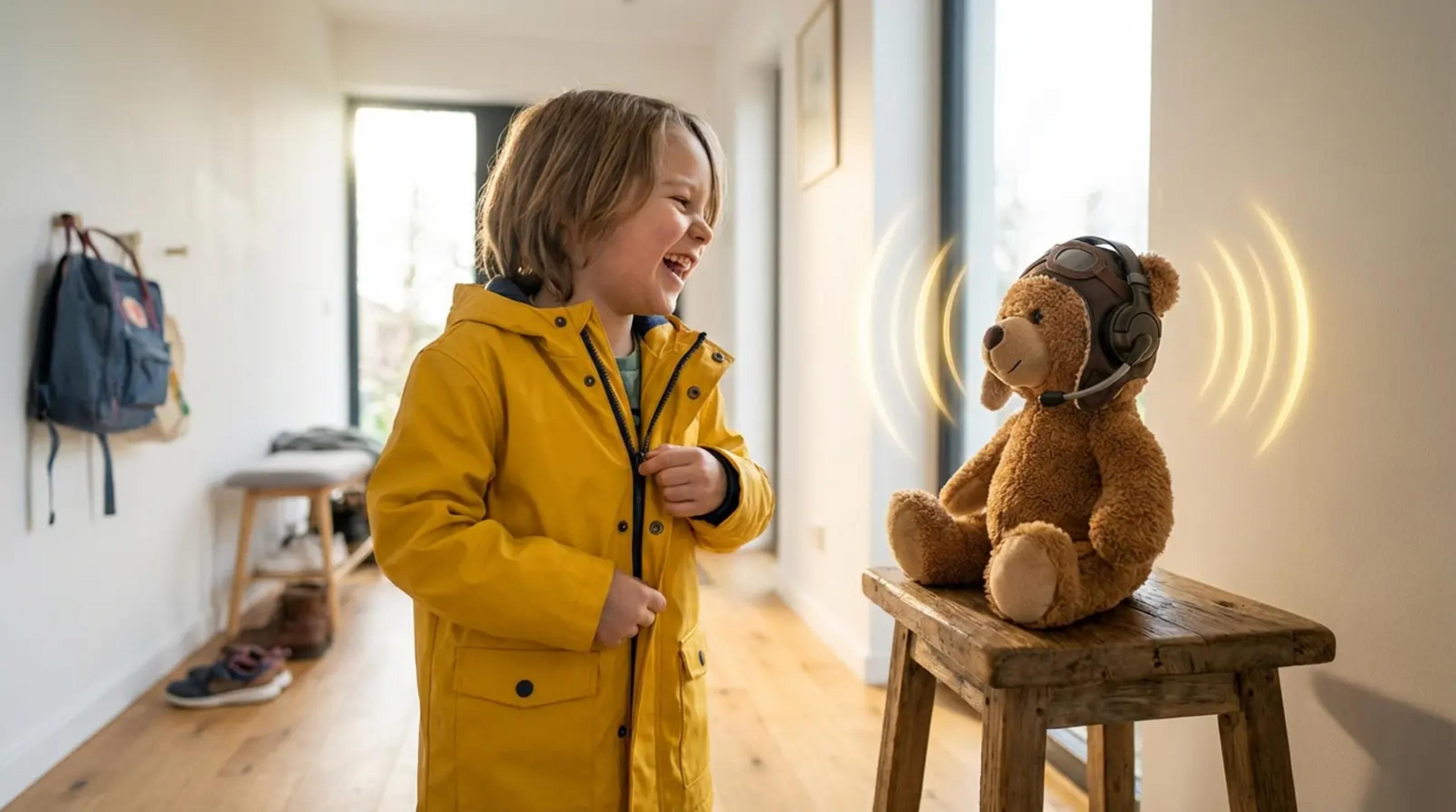
► Personalized stories featuring a child's favorite toy as a 'Mission Commander' drive higher engagement than static audio players.
► Audio-based routines are screen-free and reduce sensory overstimulation during high-energy mornings.
The sun is barely up, and the battle lines are already drawn. You’ve asked your child to put on their socks for the fourth time. By the fifth, your voice has that sharp edge of desperation. If this sounds familiar, you aren’t alone. The 'morning rush' is one of the most significant stressors for modern parents, often leading to a cycle of nagging and frustration before the school day even begins.
But what if the morning wasn't a series of chores, but a high-stakes mission? By shifting from behavior management to executive function support, we can transform the environment. This is where the 'Morning Mission' strategy comes in.
Research into child development shows that children often struggle with 'transition anxiety'—the mental friction of moving from a state of rest (sleep) to a state of high demand (school prep). Furthermore, their executive functions, like working memory and inhibition, are still under construction. When we nag, we are essentially trying to 'out-will' a brain that isn't fully wired for these tasks yet.
Gamification changes the brain chemistry. Instead of the stress hormone cortisol rising from a parent's raised voice, a 'mission' narrated through audio can trigger dopamine. This makes the completion of a task—like finding matching shoes—feel like a victory in a game rather than a chore.
Turn your child's favorite characters into personalized audio adventures. Sign up for free and start your story today!
Get Started FreeThe strategy is simple: replace your voice with a story. Using AudioFables, you can create a personalized story where your child's favorite toy—let's say, Barnaby the Bear—is the 'Mission Commander.' Barnaby narrates the morning, explaining that the 'Rocket Ship' (the car) departs in 20 minutes and the crew needs to be 'Suit Up' (get dressed).
This utilizes the , where children are more likely to follow instructions from a beloved character than a parent. Unlike static players like the , which offer generic content, AudioFables allows you to tailor the mission to your child's specific hurdles, like 'The Raincoat Adventure' on a Tuesday morning.
By using auditory cues, you also avoid the 'screen-time trap.' Visual timers can sometimes cause more anxiety, but a narrative flow keeps the child moving without the overstimulation of a tablet. It's a key part of .