The Nervous System Reset: How Audio Stories Help Overstimulated Kids Sleep
•Written by AudioFables Team
Key Takeaways:
► Audio stories replace overstimulating screen visuals with calming auditory input.
► This shift activates the parasympathetic nervous system (rest and digest).
► Personalized elements act as an anchor, creating safety and speeding up the transition to sleep.
► Consistent audio routines signal the brain that it is time to wind down.
We’ve all been there. It’s 8:30 PM, and your child is physically exhausted but mentally wired. They are jumping on the bed, asking for water for the tenth time, or melting down over the wrong pair of pajamas. This is the classic "tired but wired" state, often the result of an overstimulated nervous system that simply doesn't know how to switch off.
In a world dominated by visual stimuli, our children's brains are constantly processing rapid-fire information. To transition peacefully to sleep, they need a "nervous system reset." Here is how personalized audio stories can bridge the gap between daytime chaos and nighttime calm.
When a child is overstimulated—whether from school, play, or screens—their sympathetic nervous system (fight or flight) is dominant. Their cortisol levels are elevated, keeping them alert. To fall asleep, they must shift into the parasympathetic state (rest and digest).
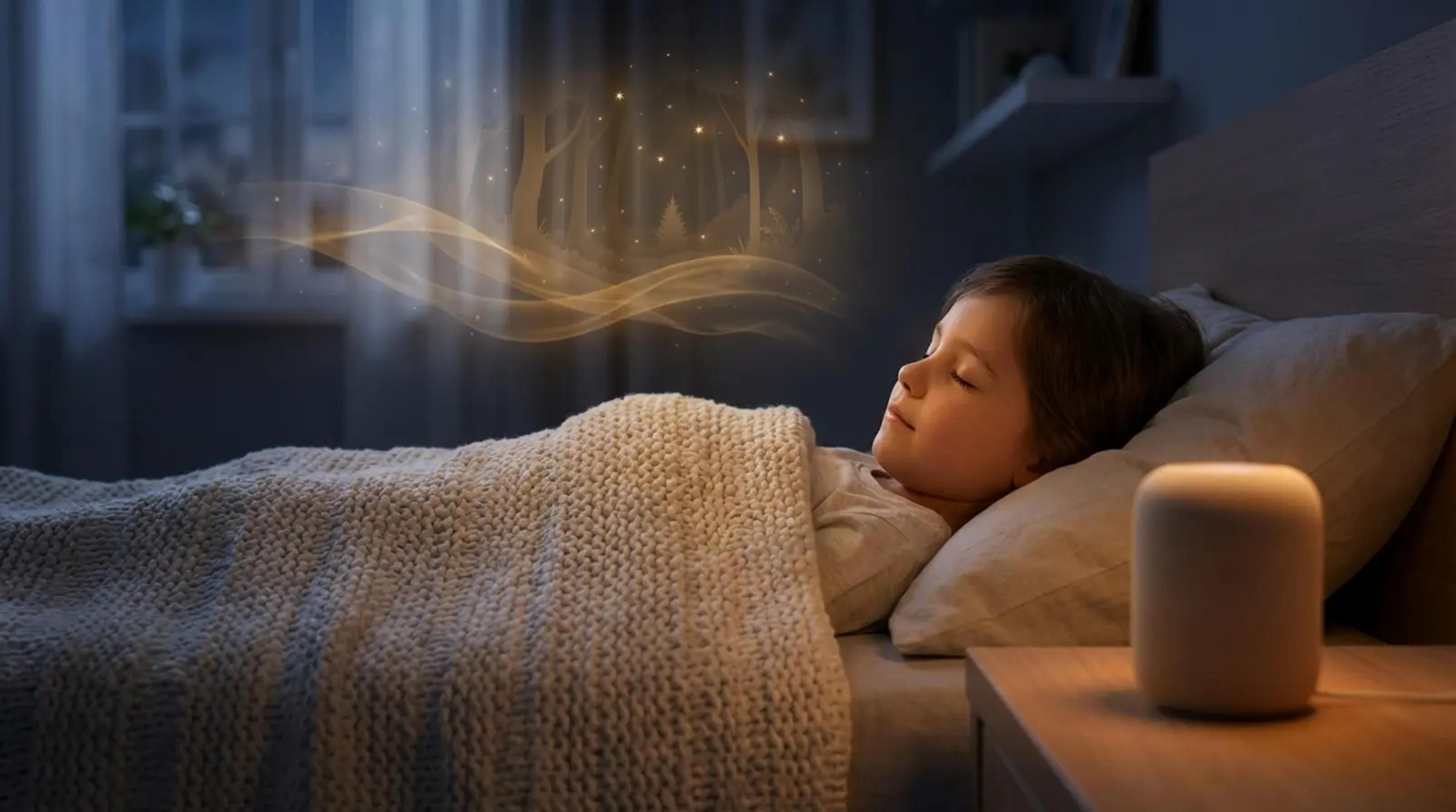
Visual entertainment, even seemingly calm cartoons, keeps the brain in a reactive, alert state. In contrast, listening to a story allows the visual processing centers to relax. By removing the blue light and rapid visual cuts, we lower the sensory load. This is where the magic happens: the brain stops reacting and starts imagining. Moving from passive screen time to active imagination is a crucial step in lowering heart rate and preparing the body for rest.
Turn your child's favorite characters into personalized audio adventures. Sign up for free and start your story today!
Get Started FreeWhile any calm audio can help, personalized stories offer a distinct advantage. Anxiety and overstimulation often stem from a lack of control or connection. When a child hears their own name woven into a story—perhaps engaging in a soothing adventure with their favorite animal—it triggers a sense of safety and belonging.
This "cocktail party effect" (where the brain instantly prioritizes one's own name) captures their attention gently, preventing their mind from racing back to the worries of the day. At AudioFables, we find that this connection helps children settle faster because the story feels like a safe space created just for them.
To effectively reset the nervous system, consistency is key. Try this simple routine for two weeks:
By replacing visual chaos with a soothing, predictable narrative, you aren't just putting your child to sleep; you are teaching their nervous system how to relax independently. This is a skill that benefits emotional regulation well beyond bedtime.