The Sensory-Sanctuary Bedtime: Reclaiming Connection When You’re Touched-Out
•Written by AudioFables Team
Key Takeaways:
► Touched-out parents face sensory overload at bedtime, making connection difficult.
► Audio stories act as a sensory buffer, reducing the parent's vocal and cognitive output.
► Personalization allows parents to remain the 'emotional architect' without the exhaustion.
► Co-regulation is only possible when the parent's nervous system is also regulated.
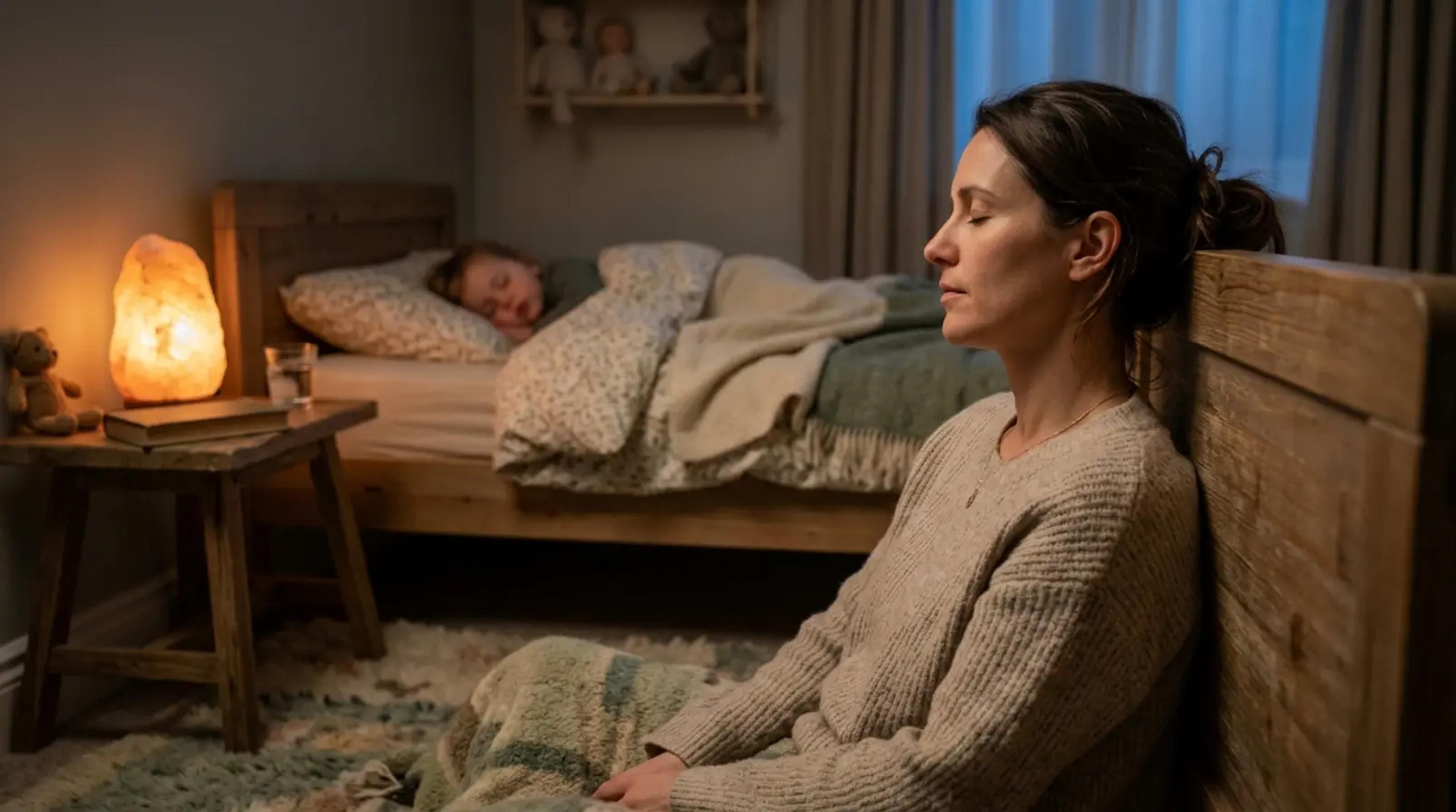
It’s 7:30 PM. You’ve spent the day navigating a minefield of sticky fingers, loud toys, and a never-ending stream of questions. By the time bedtime rolls around, your nervous system is screaming for silence. This is the 'touched-out' phenomenon—a state of sensory overload where further tactile or auditory input feels physically painful. For the 20-30% of parents who identify as Highly Sensitive (HSP), this isn't just a bad mood; it’s a physiological limit.
Bedtime is often the most sensory-intensive part of the day. It requires physical closeness, constant vocalization, and the high-level cognitive effort of storytelling. When you are already experiencing bedtime burnout, the demand to 'make up a story' can be the final straw. You want to connect with your child, but your brain is simply out of bandwidth. This is where the concept of a 'Sensory Sanctuary' becomes vital.

Turn your child's favorite characters into personalized audio adventures. Sign up for free and start your story today!
Get Started FreeUnlike passive audio players, AudioFables allows you to stay in the role of the 'emotional architect.' You choose the themes, the lessons, and the characters—often including your child’s favorite toys. However, you delegate the heavy lifting of narration to our AI. This creates a that protects your energy. You can sit in the dark, breathe deeply, and hold your child’s hand while the story unfolds, reclaiming the connection without the sensory overload.
One of the biggest hurdles for touched-out parents is . By automating the narrative flow, you remove the pressure to be 'creative' when you are most depleted. This allows for a for both you and your child. You aren't 'checking out'; you are using technology as a quiet assistant to preserve your emotional presence.
By shifting the sensory load, you transform bedtime from a battle of endurance into a sanctuary of shared wonder. You’re not just playing a story; you’re building a bridge back to your child, one personalized adventure at a time.