The 1,000-Word Advantage: How Personalized Audio Stories Close the Modern Literacy Gap
•Written by AudioFables Team
Key Takeaways:
► One in three children misses out on regular reading time due to parental exhaustion.
► Personalized audio stories are scientifically proven to be as effective as books for vocabulary growth.
► The 'Hero Effect' increases attention spans by making the child the center of the narrative.
► Audio stories introduce 'rare words' essential for future academic success without increasing screen time.
We’ve all been there. It’s 8:00 PM, you’ve had a relentless day at work, and the thought of reading a 20-page picture book feels like climbing Everest. You’re not alone. The latest research from the Stiftung Lesen 'Vorlesemonitor 2024' shows that 32% of parents in Germany struggle to read to their children regularly. This isn't a lack of love; it’s a symptom of modern exhaustion and the digital age. But this 'reading gap' has long-term consequences for a child's literacy and vocabulary.
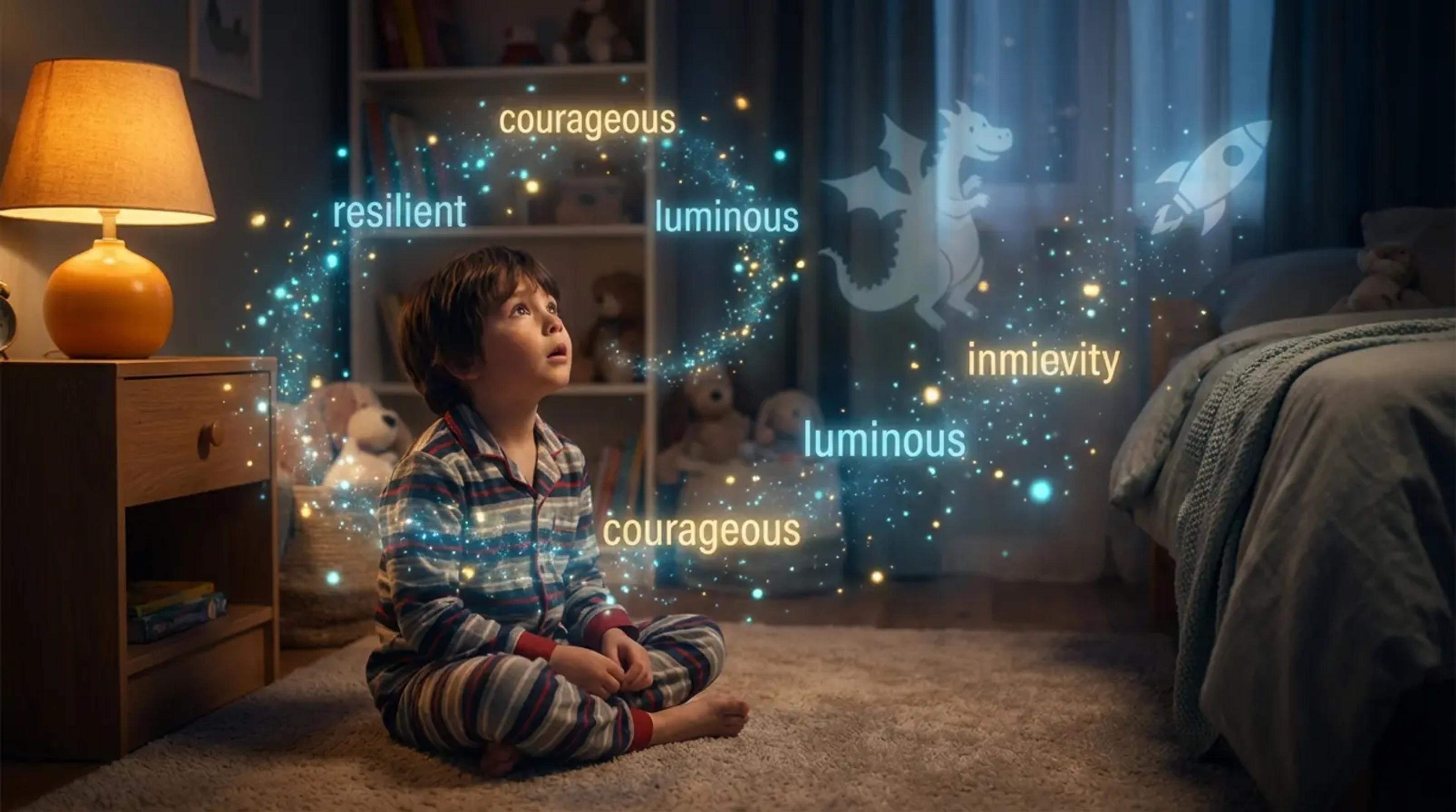
Did you know that children's books and high-quality narratives contain 50% more 'rare words' than everyday adult conversation or television? These are complex, descriptive words—like 'resilient,' 'luminous,' or 'courageous'—that build the foundation for reading comprehension. When we stop reading, children lose access to this rich linguistic environment. This is where screen-free storytelling alternatives step in as a 'literacy lifeline.'
Recent 2025 academic studies, such as those by Cho & Yim, have revealed a breakthrough: AI-generated personalized stories are just as effective for vocabulary acquisition as traditional books. Why? Because of the 'Hero Effect.' When a child hears their own name and their own favorite toys in a story, their brain enters a state of high engagement. This emotional investment rebuilds their attention span and makes them more likely to remember and use those 'rare words' they just heard.

Turn your child's favorite characters into personalized audio adventures. Sign up for free and start your story today!
Get Started FreeThe upcoming parenting trend is 'functional parenting'—finding high-value educational tools that don't add to your mental load. Unlike static content from a Toniebox or Yoto, AudioFables creates a bridge between your child's world and academic success. It’s not about replacing the parent; it’s about providing a high-quality when you simply need a break.
By closing the literacy gap through personalized audio, you aren't just getting them to sleep; you're giving them a 1,000-word advantage that will last a lifetime.