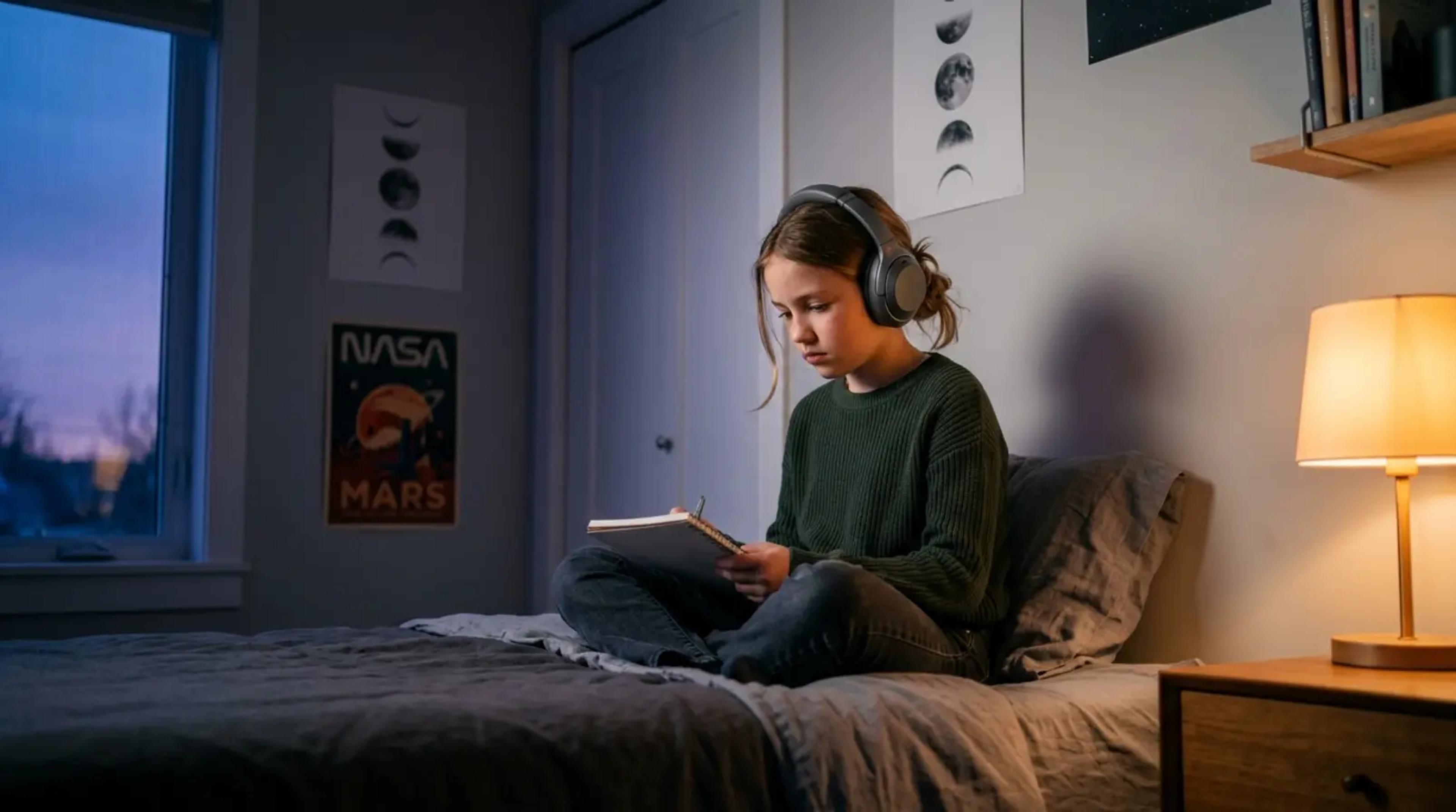
The 'Tween-Hero' Pivot: Solving the 'Too Old for Bedtime Stories' Dilemma
•Written by AudioFables Team
Key Takeaways:
► Tweens (8-12) reject 'babyish' content but still crave the comfort of bedtime rituals.
► Personalization provides the 'Sophisticated Agency' older children need to stay engaged.
► Audio stories act as a 'dopamine reset' from high-stimulation screens like TikTok or Roblox.
► Self-referential storytelling helps tweens process complex social dynamics and middle-school anxiety.
It happens almost overnight. One day, your child is snuggled up for a picture book, and the next, they’re rolling their eyes at the very mention of a 'bedtime story.' This is the 'Bedtime Gap'—a developmental phase where children aged 8 to 12 outgrow traditional nursery content but aren't quite ready for the dry, abstract nature of adult podcasts or long-form audiobooks without a personal hook.
Around age nine, children undergo a significant cognitive shift. They become acutely aware of their own thoughts and, more importantly, their social standing. To a 10-year-old, a Toniebox or a colorful plastic player feels like a relic of 'babyhood.' They crave what psychologists call 'Sophisticated Agency'—the feeling that they are the master of their own narrative. When content feels too young, they reject it to protect their developing identity, even if they secretly miss the closeness of the routine.
Turn your child's favorite characters into personalized audio adventures. Sign up for free and start your story today!
Get Started FreeFor many parents, the biggest household friction point is the 'Digital Curfew.' Tweens are often glued to high-dopamine platforms like Roblox or YouTube right up until lights out. Transitioning from that level of stimulation to a dark, quiet room is jarring, often leading to 'Pre-teen Insomnia.' This is where a becomes essential. By replacing the screen with a personalized audio story, you provide a 'soft landing' that keeps their brain engaged without the blue light.
AudioFables solves this dilemma by moving away from generic 'nursery' themes. Instead of a generic knight, the story features *them*—using their name, their specific hobbies (like coding or competitive swimming), and addressing the social dynamics they actually face in middle school. This 'Self-Referential Storytelling' is a form of narrative therapy. It validates their experiences and makes them the hero of a world that feels mature and relevant.
Whether you are looking for or trying to build a , the key is respect. By offering high-quality, AI-generated narration that sounds professional rather than robotic, we provide tweens with a sophisticated alternative to screens that respects their growing maturity while preserving the magic of a bedtime story.