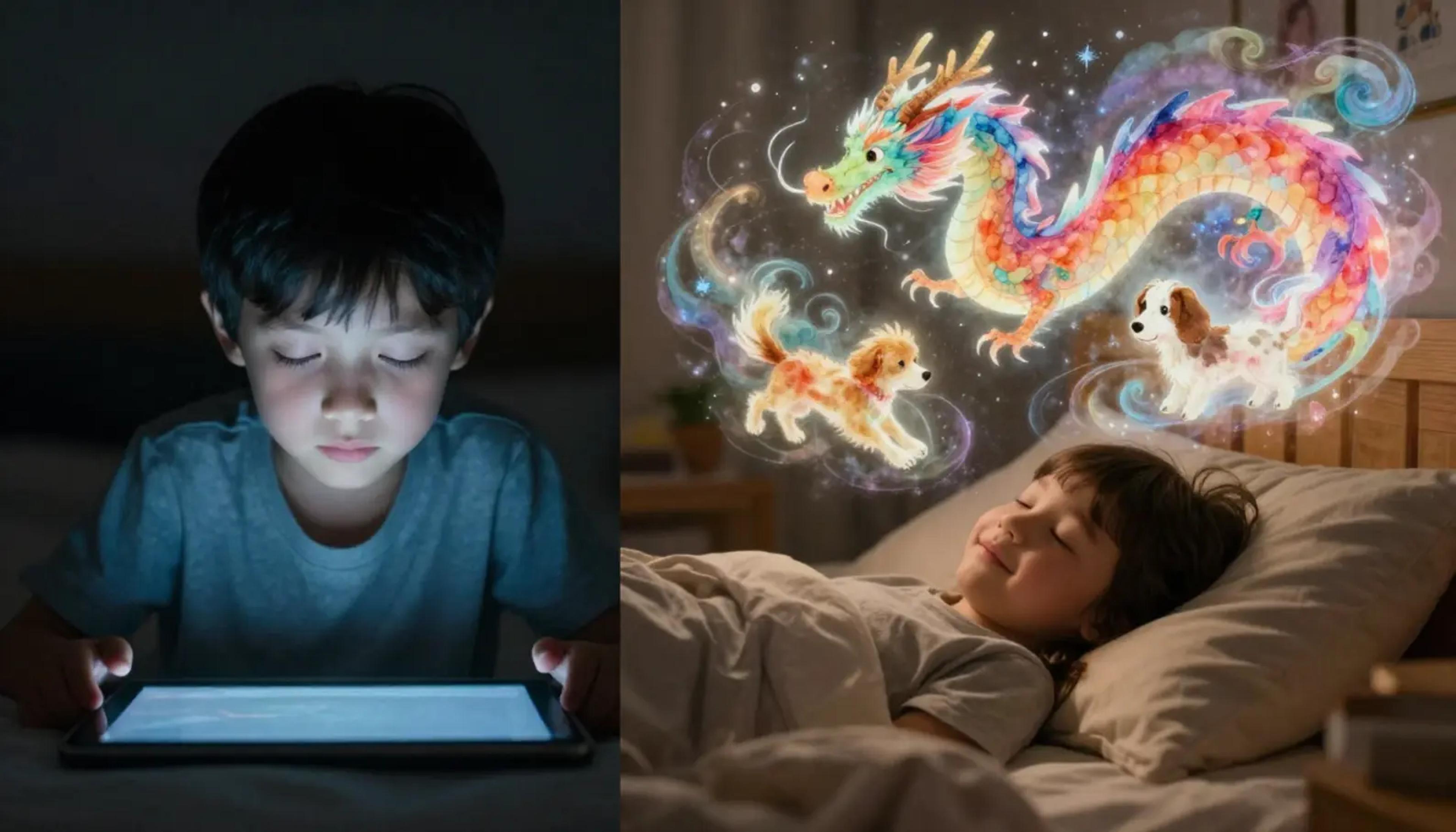
Vooks vs. AudioFables: Why Your Child’s Imagination Prefers Audio Over Animation for Bedtime
Key Takeaways:
► Auditory visualization builds stronger cognitive skills than passive watching.
► Screen-free audio eliminates blue light, promoting better melatonin production.
► Personalization in AudioFables creates higher emotional engagement than static libraries.
► Audio stories encourage 'active' listening and longer attention spans.
As parents, we are constantly navigating the 'screen time' minefield. We know that high-octane cartoons aren't great for winding down, so many of us turn to platforms like Vooks. Vooks is a fantastic bridge—it offers beautifully narrated, subtly animated storybooks that are certainly better than the frantic energy of YouTube. However, when it comes to the sacred hour of bedtime, there is a fundamental difference between watching a story and hearing one. is where the real magic happens for a child's brain.
The 'Internal Movie' vs. The External Screen
The primary difference between Vooks and AudioFables lies in who does the creative heavy lifting. Vooks provides the imagery. While the animation is gentle, it still does the work of 'seeing' for your child. In contrast, audio-only storytelling utilizes the . When a child listens to a story, their brain must work to visualize the characters, the colors, and the action. This process of auditory visualization is a critical workout for working memory and focus.
Create Magic Bedtime Stories
Turn your child's favorite characters into personalized audio adventures. Sign up for free and start your story today!