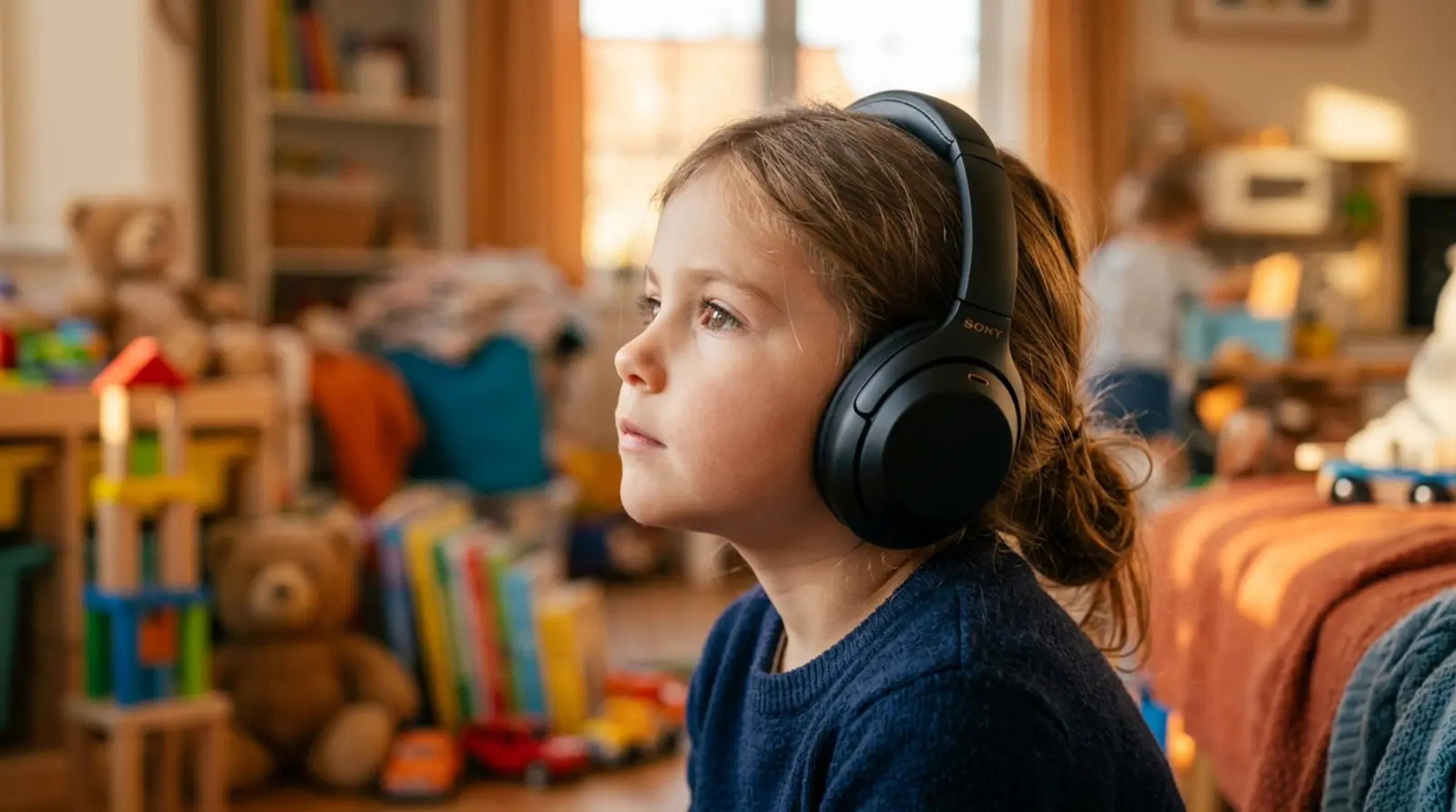
The Auditory-Filter Protocol: Training Your Child’s Brain to Focus
•Written by AudioFables Team
Key Takeaways:
► Modern background noise can reduce a child's comprehension by up to 70%.
► 'Auditory Selective Attention' is the brain's ability to filter relevant information from noise.
► Static audio content leads to 'auditory habituation,' where the brain stops paying attention.
► High-Salience Personalization acts as a cognitive anchor, training the brain to stay engaged.
Does your home ever feel like a constant hum of background noise? Between the buzz of appliances, city traffic, and the passive chatter of a nearby tablet, our children are growing up in what researchers call an 'auditory fog.' This isn't just a minor annoyance; it's a developmental hurdle. Recent 2025 studies from the University of Illinois suggest that this constant noise is creating an 'Auditory Filter' crisis for Gen Alpha.
At the heart of this issue is a skill called Auditory Selective Attention. This is the brain's ability to lock onto a single, important voice while successfully ignoring the distractions around it. When this filter is weak, children struggle to follow instructions in a busy classroom or engage in meaningful social interactions. To strengthen this 'muscle,' the brain needs exposure to 'structured, salient sounds'—sounds that the brain deems too important to ignore.
Many parents turn to screen-free tools like the Toniebox or Yoto to help their children focus. While these are excellent for reducing screen time, they often rely on static content. Once a child has heard a story three or four times, 'auditory habituation' kicks in. The brain recognizes the pattern, labels it as 'safe and predictable,' and begins to treat it as—you guessed it—background noise.
Turn your child's favorite characters into personalized audio adventures. Sign up for free and start your story today!
Get Started FreeThis is where the 'Auditory-Filter Protocol' comes in. By using AI to generate stories that include your child’s specific name, their favorite toys, and even recent life events, we create 'High-Salience' audio. When a child hears their own name or a detail about their day woven into a narrative, their brain's reticular activating system (the focus center) lights up. It acts as a cognitive anchor, forcing the brain to prioritize the story over the noise of the dishwasher or the street outside.
This isn't just about entertainment; it's about . By consistently engaging with content that demands focus through personalization, you are effectively training their brain to tune out the 'rot' and tune into what matters. This skill is directly transferable to the classroom, helping them thrive even in the most distracting environments.
1. Create a Listening Sanctuary: Start in a quiet room, then gradually introduce minor background sounds as their focus improves.
2. Use Personal Anchors: When generating an AudioFable, include a specific 'secret word' or a detail from their day that they have to listen for.
3. Consistency is Key: Just 15 minutes of active listening a day can significantly improve .