
The 'Awe-Seeker' Strategy: Reclaiming Wonder in a Screen-First World
•Written by AudioFables Team
Key Takeaways:
► Awe is a biological necessity that fosters empathy and emotional regulation.
► The 'Wonder Gap' is caused by screens providing instant answers instead of mystery.
► Auditory visualization is more effective than visual media at triggering the 'vastness' of awe.
► Personalized stories create 'personal relevance,' a key psychological trigger for wonder.
In a world where every question is answered by a three-second Google search or a YouTube video, our children are facing a quiet crisis: the disappearance of wonder. Experts like Deborah Farmer Kris have identified a growing 'wonder gap.' When children are constantly fed literal, visual interpretations of stories, their brains stop doing the hard work of imagining the vastness of the universe. This is where the 'Awe-Seeker' strategy comes in.
Awe isn't just a 'nice' emotion; it's a developmental powerhouse. Research shows that experiencing awe—the feeling of being in the presence of something vast that transcends understanding—triggers the parasympathetic nervous system. This helps children regulate their emotions and prepare for deep, restorative sleep. Furthermore, awe fosters a 'small self' perspective, which is the foundation of pro-social behaviors like empathy and generosity. When we feel small in a big, beautiful world, we feel more connected to others.
Screens are the ultimate 'wonder-killers' because they leave nothing to the imagination. Platforms like YouTube or Vooks provide literal images, effectively 'spoiling' the brain's ability to construct its own vast mental worlds. To reclaim wonder, we must move from passive screen time to active imagination. Audio storytelling forces the brain to engage in 'auditory visualization,' building the 'vastness' of a story from the inside out.
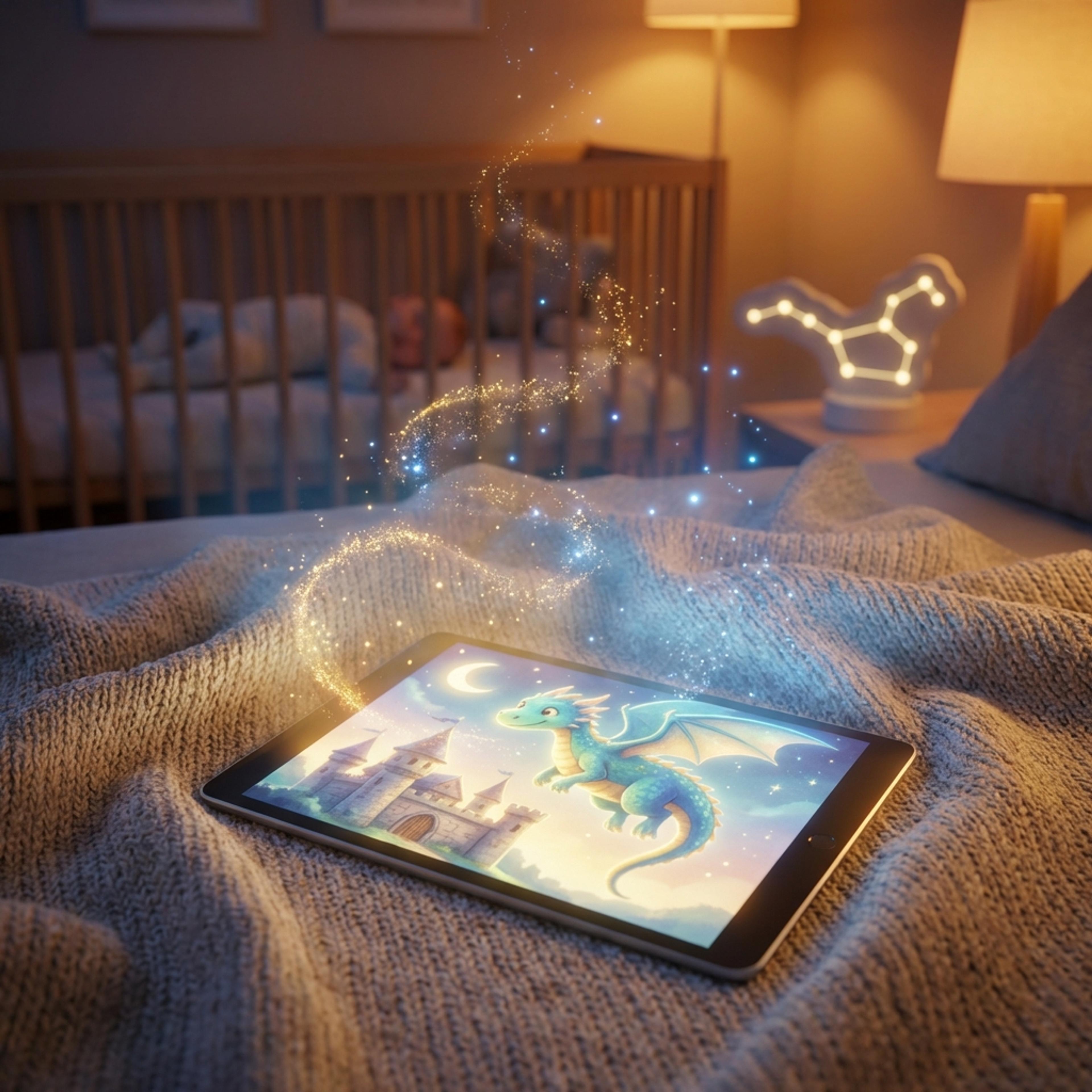
Turn your child's favorite characters into personalized audio adventures. Sign up for free and start your story today!
Get Started FreeWhile generic audio players like Toniebox or Yoto offer screen-free content, they often lack 'personal relevance.' The psychological response of awe is most powerful when it feels relevant to the individual. By using in a personalized context—where your child is the hero exploring a vast nebula or a deep-sea kingdom—you bridge the gap between fantasy and their own identity. This makes the 'expansive' emotion of wonder more lasting and impactful.
You don't need a trip to the Grand Canyon to foster wonder. Start by creating an at bedtime. Use AudioFables to generate a story where your child encounters something magnificent—a giant whale that speaks in songs or a forest where the trees tell the history of the stars. By placing your child at the center of the mystery, you aren't just telling a story; you're expanding their world.