The 'Childhood Preservation' Strategy: Why Personalized Audio Stories are the Best Antidote to the 'Growing Up Too Fast' Phenomenon
•Written by AudioFables Team
Key Takeaways:
► The 'Sephora Kids' and KGOY trends are pressuring children to abandon childhood for adult consumerism.
► Audio storytelling builds 'Auditory Visualization,' strengthening the prefrontal cortex.
► Personalization acts as an 'identity anchor,' validating a child's current developmental stage.
► AudioFables offers a tech-forward alternative that protects psychological boundaries.
Have you noticed your seven-year-old suddenly asking for high-end skincare or obsessing over social media trends? You’re not alone. In 2025, the 'Sephora Kids' phenomenon and the 'KGOY' (Kids Getting Older Younger) trend have become major anxieties for modern parents. Algorithms are increasingly exposing young children to adult-oriented consumerism, leading to a decline in unstructured, imaginative play. As parents, we are looking for a way to hit the brakes and preserve the magic of being little.
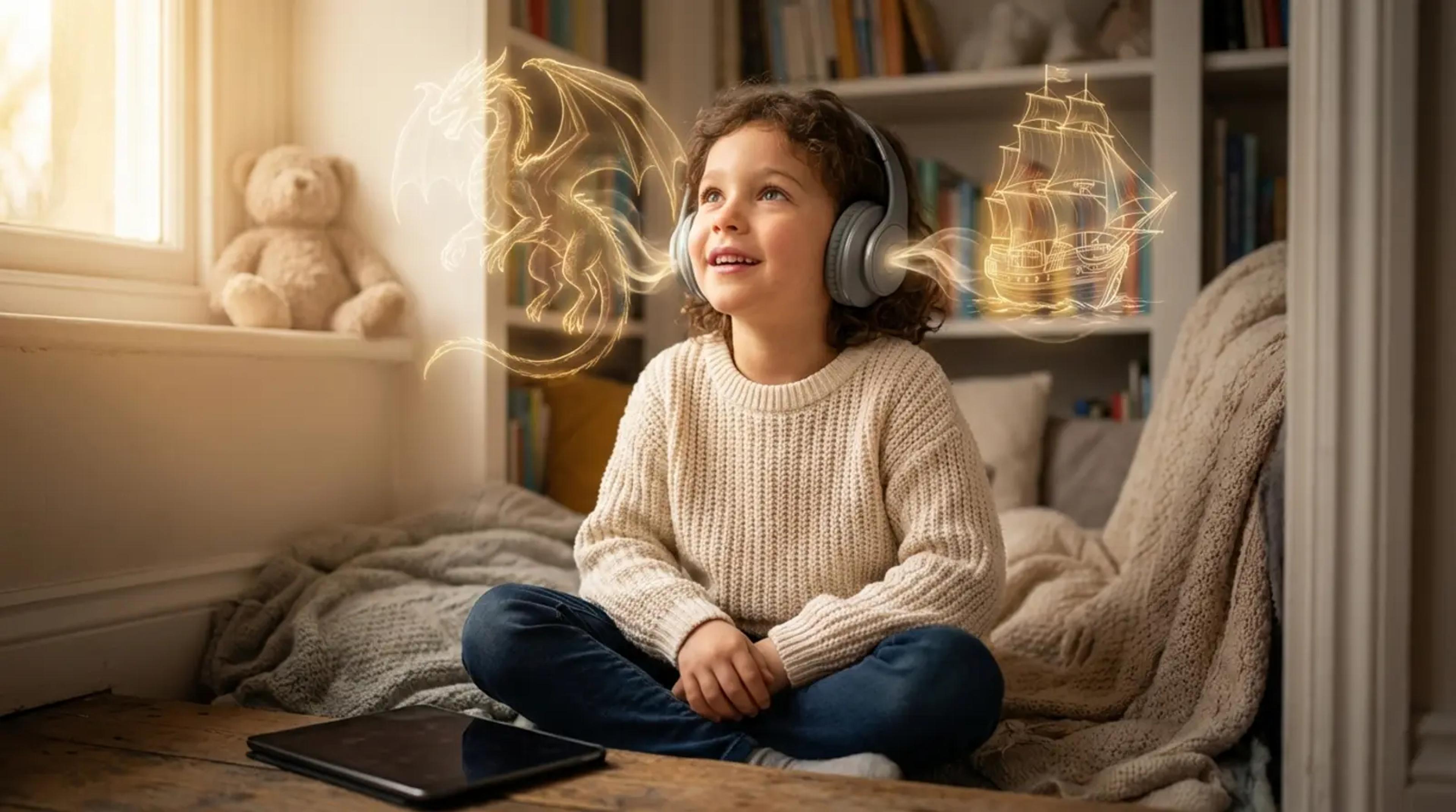
Just as we care about what our children eat, we must consider their 'digital nutrition.' High-dopamine, short-form videos on platforms like TikTok or YouTube are the 'junk food' of the mind. They offer passive consumption that leaves little room for the brain to work. To counter this, children need 'slow' media. Audio storytelling acts as a 'private theater' for the mind. When a child listens to a story, their brain must work to generate its own imagery—a process known as Auditory Visualization. This doesn't just entertain; it strengthens the prefrontal cortex and builds creative confidence.
Turn your child's favorite characters into personalized audio adventures. Sign up for free and start your story today!
Get Started FreeThe most powerful way to combat the pressure to grow up is to validate the world the child currently lives in. This is where personalized audio stories become a game-changer. When a story features your child’s favorite stuffed animal, their pet, or their own recent trip to the park, it acts as an 'identity anchor.' It tells them: 'Your world is important. Your imagination is enough.' This reinforces their current developmental stage, acting as an against the outside pressure to act like a mini-adult.
While physical audio players like Tonies are great for toddlers, older kids (ages 7-10) often start to see them as 'babyish.' This is the critical window where they often migrate to smartphones and tablets. AudioFables bridges this gap by offering a 'tech-forward' app experience that feels modern to a child but remains strictly age-appropriate and screen-free in its delivery. Unlike generic meditation apps, AudioFables focuses on , turning the child into the hero of their own narrative.
By integrating personalized audio into your daily routine, you aren't just filling time. You are building a where childhood can flourish, one story at a time. Let’s give our kids the space to be kids for just a little while longer.