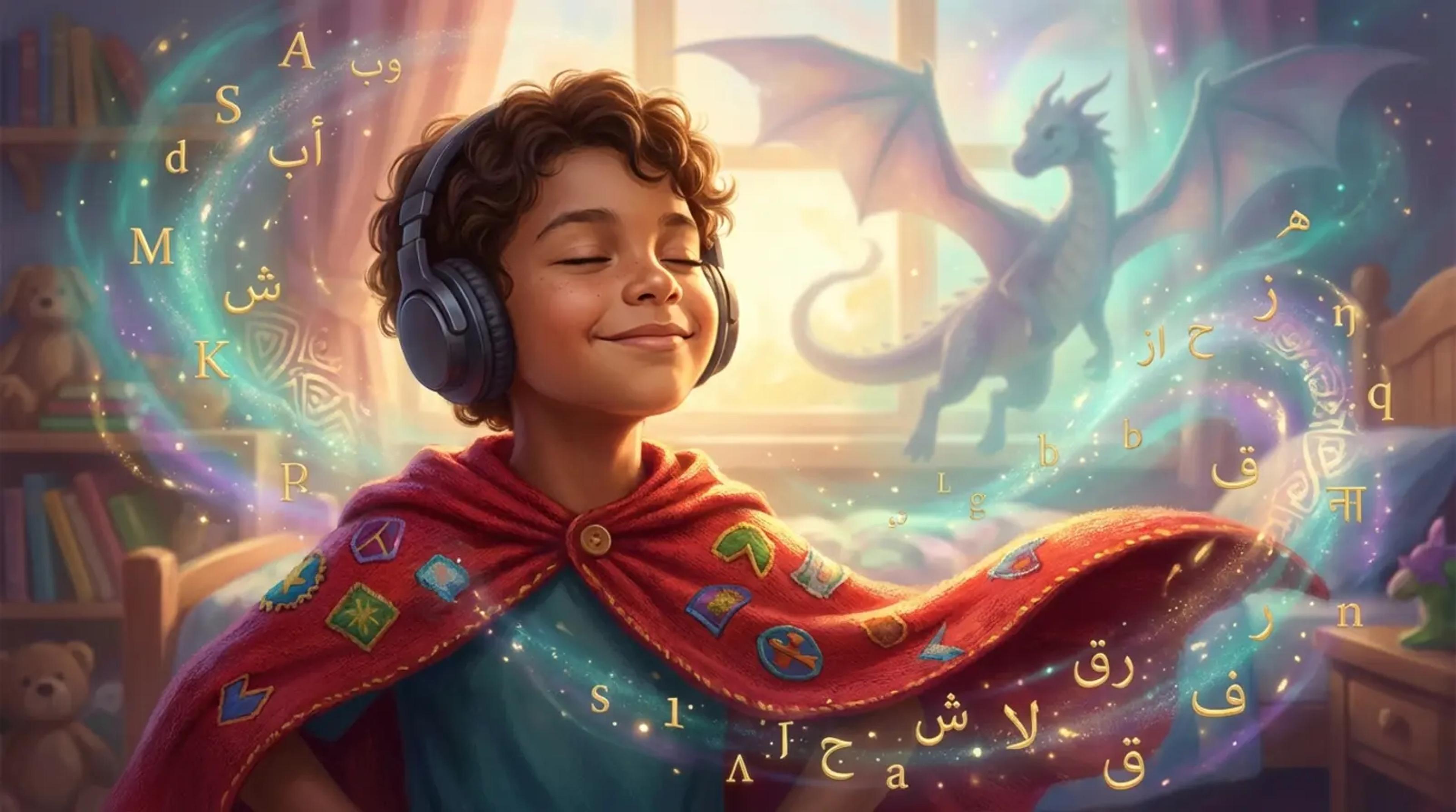
The 'Heritage Hero' Strategy: Overcoming Your Child’s Resistance to a Second Language
•Written by AudioFables Team
Key Takeaways:
► Receptive bilingualism is a normal developmental stage, not a failure of parenting.
► The 'Affective Filter' (anxiety or boredom) is the primary barrier to speaking a heritage language.
► Personalized audio stories leverage 'Integrative Motivation' by making the child the hero of the narrative.
► Screen-free, low-pressure immersion is more effective than traditional lessons for long-term retention.
It’s a scene many bilingual parents know too well: You speak to your child in your native tongue—Spanish, Mandarin, German, or Arabic—and they understand every word. But when they open their mouth to reply, only English comes out. This phenomenon, known as 'receptive bilingualism,' can feel like a slow heartbreak. Parents often fear their child will become a 'No Sabo' kid, losing the linguistic bridge to their grandparents and culture. But the resistance isn't usually about the language itself; it’s about the context.
In linguistics, the 'Affective Filter' is an invisible barrier that goes up when a child feels stressed, bored, or self-conscious. When we turn language into a chore—'Say it in Spanish!'—the filter rises. The child associates the heritage language with correction and pressure. To break through, we need to lower that filter. This is where the The Hero Effect comes into play. By replacing dry lessons with high-stakes adventures where the child is the protagonist, we shift the focus from 'learning' to 'living' the story.
Turn your child's favorite characters into personalized audio adventures. Sign up for free and start your story today!
Get Started FreeThe Heritage Hero strategy uses personalized audio to create 'Integrative Motivation.' This is the desire to use a language because you want to identify with a specific group or persona. When your child hears an AudioFable where they—by name—are saving a magical forest using words from their heritage language, the language becomes a superpower. It’s no longer a rule imposed by Mom or Dad; it’s the tool they used to defeat the dragon.
Unlike static products like , which offer generic foreign language stories, AudioFables allows you to weave the child’s specific interests—dinosaurs, space, or ballet—directly into the heritage language narrative. This creates a where the language feels natural and exciting.
1. Identify the 'Hook': What is your child obsessed with right now? Use that as the theme.
2. Create the Story: Use AudioFables to generate a story in your heritage language featuring your child as the lead.
3. Listen Without Expectations: Play the story during a . Don't ask them to translate. Just let them soak in the 'heroic' version of their second language.
By shifting from 'teaching' to 'storytelling,' you aren't just saving a language—you're building your child's identity as a global citizen who is the hero of their own multilingual story.