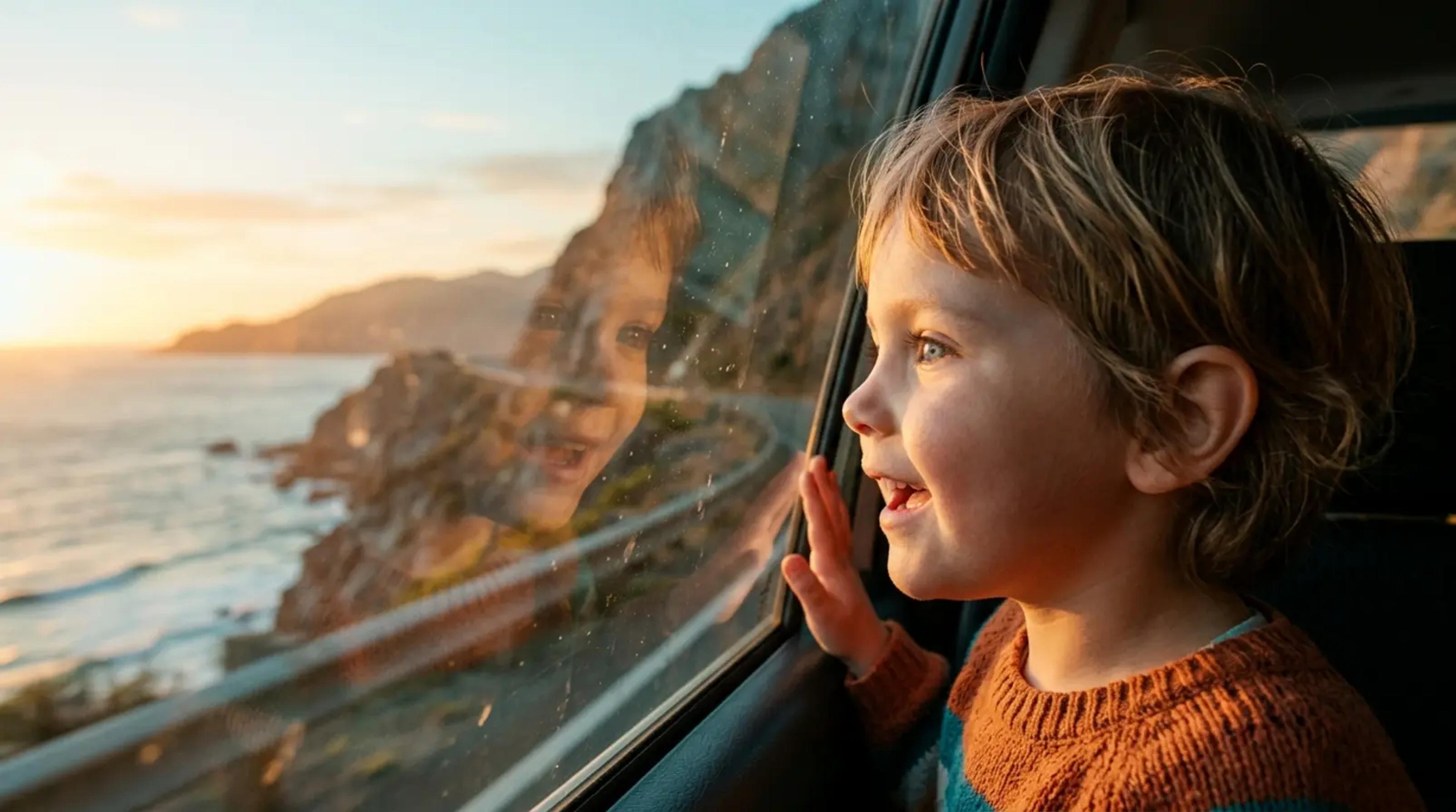
The 'Horizon-Hero' Strategy: Why Personalized Audio Stories are the Ultimate Screen-Free Solution for Car-Sick Kids
•Written by AudioFables Team
Key Takeaways:
► Motion sickness is caused by a sensory mismatch between the inner ear and eyes.
► Looking at the horizon is the most effective way to realign these signals.
► Personalized audio stories provide 'Cognitive Distraction' that keeps a child's head up.
► Unlike physical players, AudioFables has no cards or figurines to drop—a major nausea trigger.
The 'Are we there yet?' chorus is a staple of family road trips, but for 30% of children, travel comes with a much harder challenge: motion sickness. As parents, we often reach for a tablet or a book to keep them occupied, only to find that five minutes later, the dreaded nausea sets in. This happens because of a sensory mismatch. While the inner ear feels the car's motion, the eyes—fixed on a static screen or page—tell the brain the body is standing still.
The gold-standard advice from pediatricians is simple: look at the horizon. But as any parent knows, asking a bored four-year-old to 'just look at the trees' works for exactly ninety seconds. This is where the 'Horizon-Hero' Strategy comes in.
Research into 'Cognitive Distraction' suggests that high-interest auditory tasks can effectively divert the brain's focus from vestibular distress. When a child is deeply immersed in a story, their brain is less likely to register the conflicting signals that cause nausea. However, not all audio is created equal. While generic stories on Audible or Spotify provide background noise, they often fail to capture the intense focus needed to override physical discomfort.
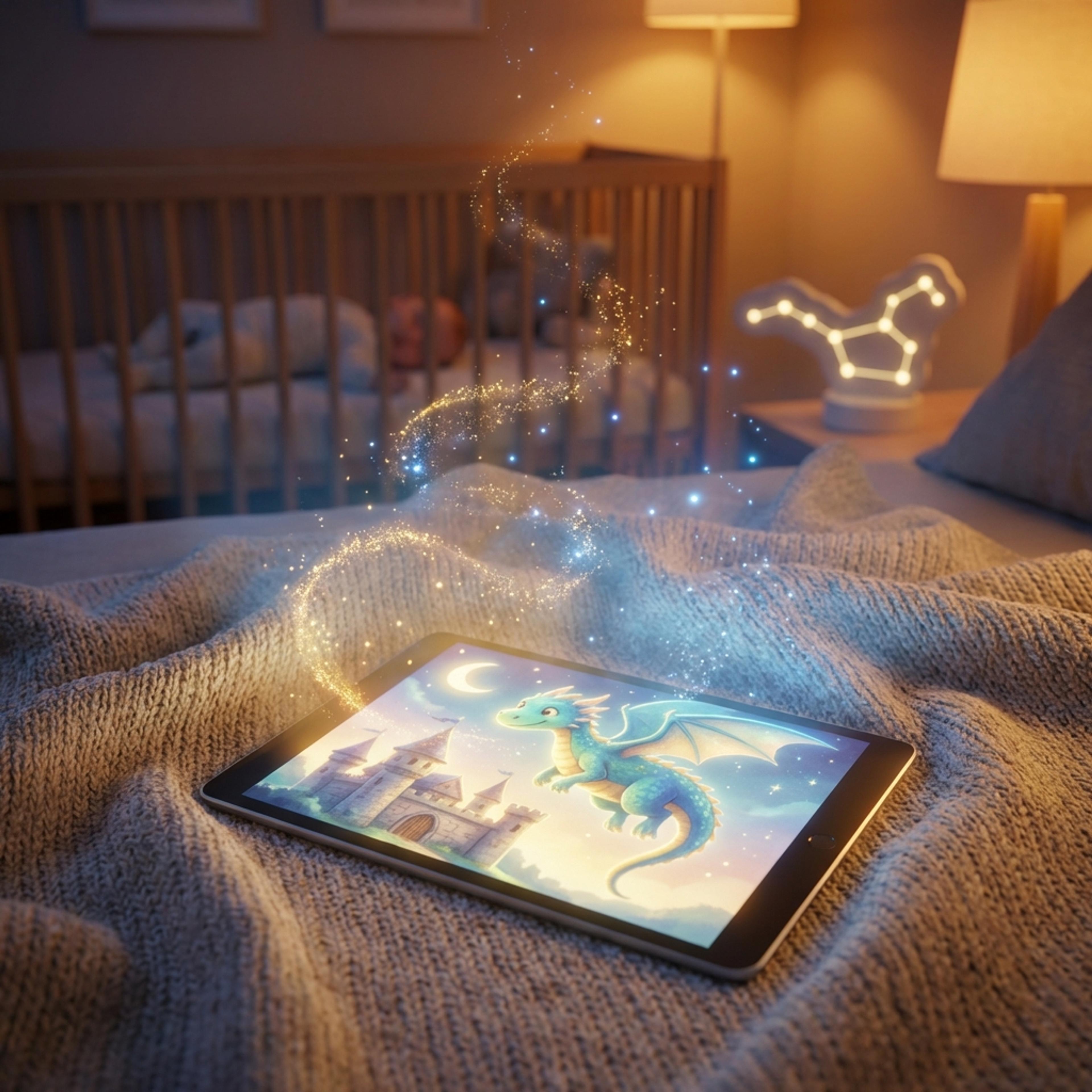
Turn your child's favorite characters into personalized audio adventures. Sign up for free and start your story today!
Get Started FreeAudioFables takes this a step further by weaving your child—and your specific journey—into the narrative. Imagine a story where your child is a 'Horizon Scout,' tasked with spotting 'Cloud Dragons' or 'Mountain Giants' that only appear when they look out the window. By making the child the hero of a story that mirrors their real-life surroundings, we create a 'mental immersion' that naturally keeps their head up and eyes toward the horizon.
This approach also solves a major flaw found in popular screen-free players like the . These devices rely on physical cards or figurines. In a moving car, these items frequently fall between seats. The moment a child bends down to retrieve a dropped Tonie, their eyes move away from the horizon, and the nausea hits instantly. With AudioFables, there is nothing to drop and no physical clutter to manage.
To make your next trip a success, try these steps:
1. Create a story on AudioFables before you leave, mentioning the destination and the car you're in.
2. Use the 'Adventure Architect' approach to plan stops that align with the story's milestones (see our ).
3. Encourage your child to describe what their 'Hero' sees out the window, reinforcing the visual-vestibular connection.
In an era of , personalized audio isn't just entertainment—it's a natural, low-intervention tool for happier, healthier family travels.