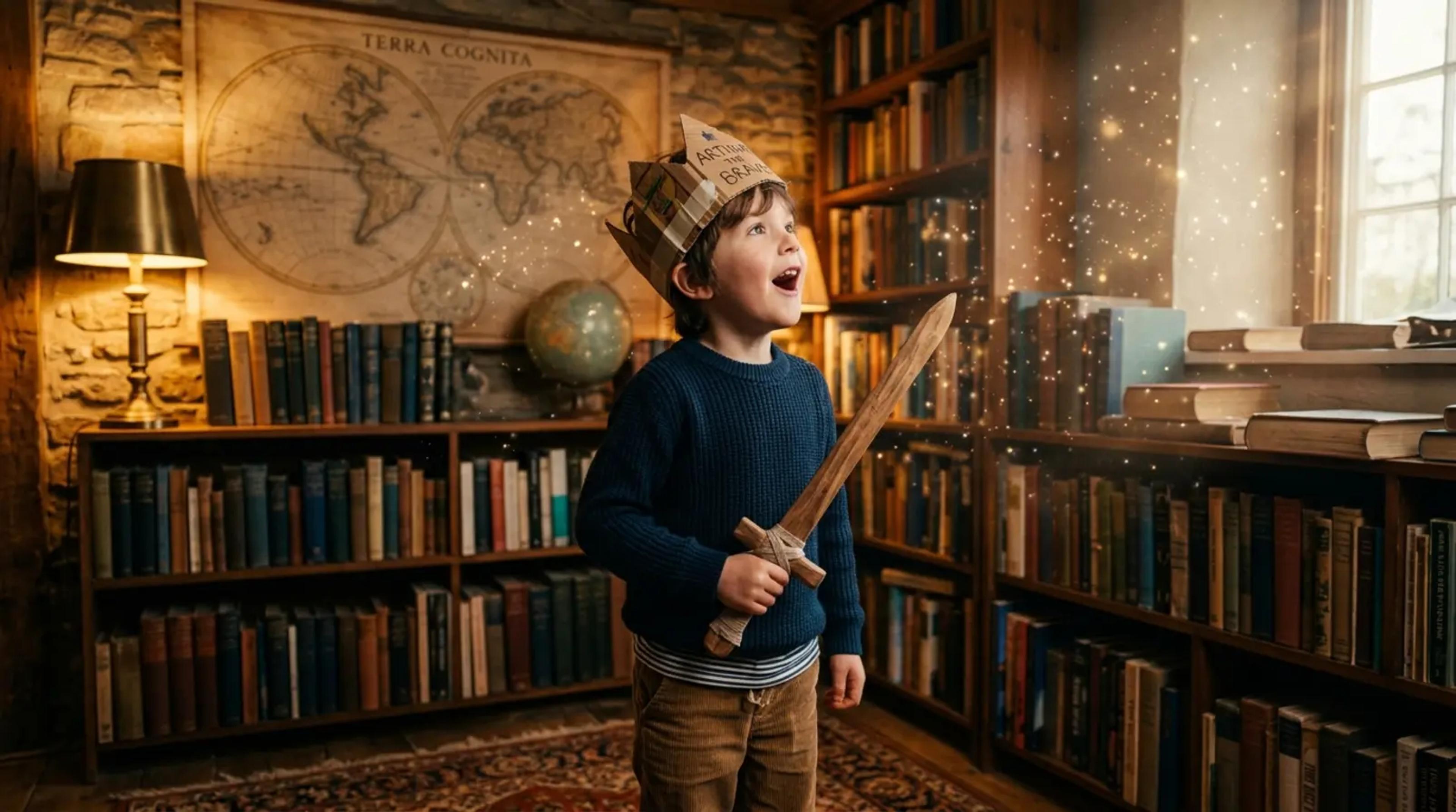
The 'Living-Books' Upgrade: How Personalized Audio Stories Turn Your Homeschool Curriculum into an Immersive Heroic Quest
•Written by AudioFables Team
Key Takeaways:
► Replace dry textbooks with 'Living Books' to foster a lifelong love of learning.
► Personalized audio leverages the 'Self-Reference Effect' to boost memory and focus.
► Immersive storytelling provides a screen-free alternative to digital 'brain rot'.
► Turning lessons into heroic quests increases engagement for children aged 2-12.
As a homeschool parent, you know the struggle. You have the best intentions, but sometimes the curriculum feels... dry. When history becomes a list of dates and science a series of disconnected facts, children often tune out. This is where the 'Living Books' philosophy, pioneered by Charlotte Mason, offers a breath of fresh air. It suggests that children should be fed 'living ideas' through high-quality literature rather than 'twaddle'—dull, simplified textbooks.
In 2025, we are seeing a massive shift toward screen-free education. Parents are increasingly wary of the 'brain rot' associated with high-stimulation tablet apps. Instead, the focus has returned to the 'Analog Childhood'—where imagination, outdoor play, and auditory learning take center stage. But how do you make a 19th-century educational philosophy work in a modern household?
Turn your child's favorite characters into personalized audio adventures. Sign up for free and start your story today!
Get Started FreeCognitive science reveals a powerful tool for learning: the Self-Reference Effect. This phenomenon shows that we remember information significantly better when it is related to ourselves. While traditional audiobooks from players like Yoto or Toniebox offer great stories, they remain static. They are stories about *someone else*.
AudioFables changes the game by allowing you to insert your child directly into the narrative. Imagine a history lesson about the Revolutionary War where *your child* is the one delivering a secret message to Paul Revere. Suddenly, the facts aren't just data points; they are memories of a personal adventure. This ensures that information sticks because it matters to the listener on a personal level.
Here is how you can use personalized audio to upgrade your daily lessons:
1. History as a Heroic Quest: Instead of reading about the Oregon Trail, create a story where your child and their favorite toy are the ones navigating the wagon. Use AudioFables to include local landmarks you’ve visited to ground the story in reality.
2. Science through Discovery: Turn the solar system into a personalized space mission. When your child is the captain of the ship, they’ll pay much closer attention to the atmospheric conditions of Jupiter.
3. Vocabulary Expansion: Narrative-rich audio provides the , exposing children to complex language in a context they understand and enjoy.
By integrating personalized audio into your homeschool day, you aren't just checking off a box in a curriculum. You are building a 'Living Books' library that breathes, speaks, and invites your child to be the hero of their own education. Start your first quest today and watch the magic of immersive learning take hold.