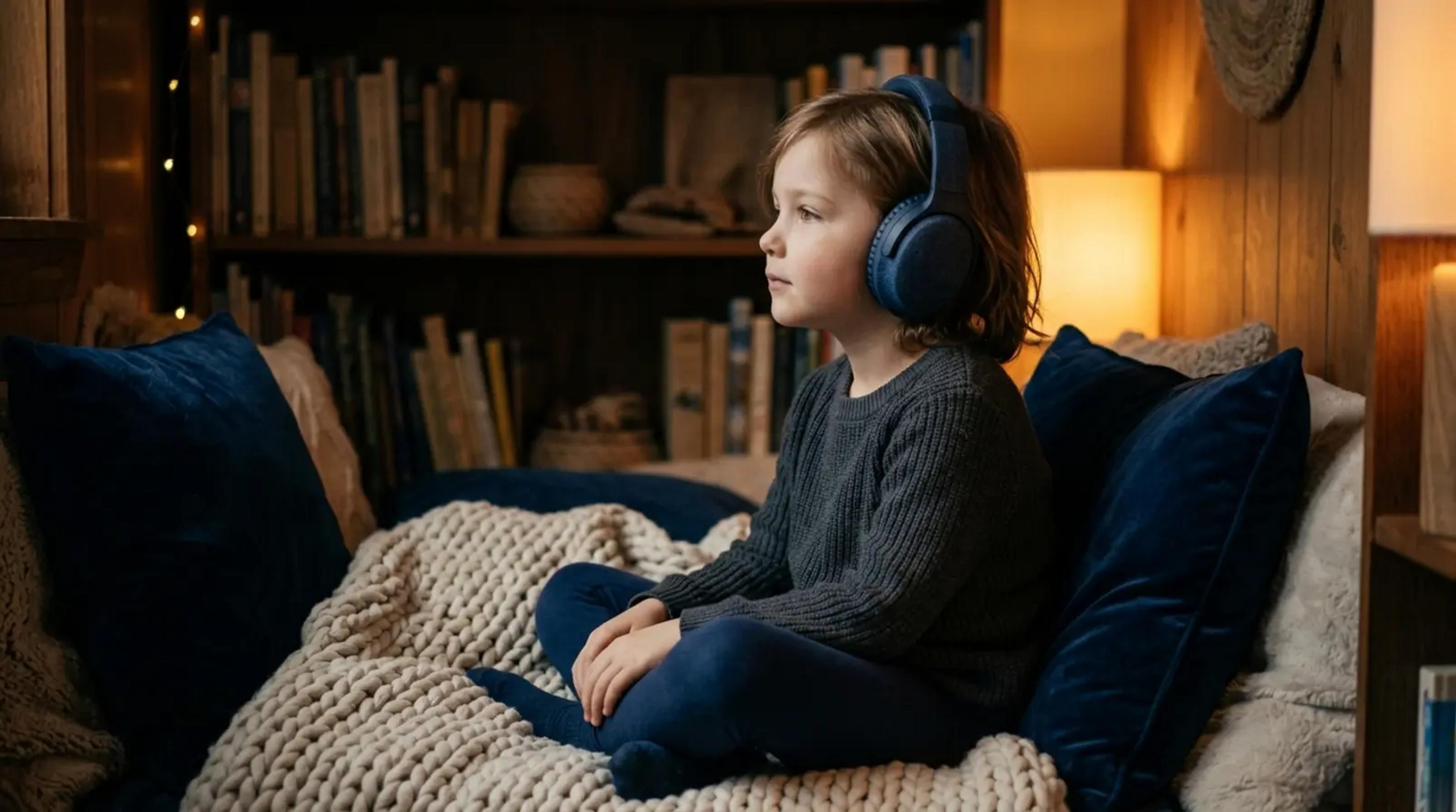
The 'Quiet-Strength' Protocol: Empowering Introverted Children with Personalized Stories
•Written by AudioFables Team
Key Takeaways:
► Introverted children prioritize deep, meaningful connections over broad social stimulation.
► 'Narrative Mirroring' helps children see their quiet nature as a superpower rather than a deficit.
► The Self-Reference Effect ensures that personalized stories lead to deeper emotional regulation.
► AudioFables provides a 'sensory sanctuary' that traditional, high-action media often lacks.
In a world that often feels like it's shouting, being a quiet child can feel overwhelming. As we move into 2026, the parenting landscape is shifting. We are seeing a massive rise in 'Slow Motherhood' and temperament-based parenting. Parents are no longer looking for ways to 'fix' their introverted children; they are looking for ways to empower them. This is where the 'Quiet-Strength' Protocol comes in.
Modern childhood is often 'experience-rich' but 'rest-poor.' For an introverted or neurodivergent child, a day full of school, loud playgrounds, and bright screens can lead to a total sensory shutdown. You might notice this as an after-school meltdown or a refusal to engage in evening routines. To help them recover, we need a dopamine reset—a way to bridge the gap between the chaotic outside world and the peaceful internal world they crave.
Turn your child's favorite characters into personalized audio adventures. Sign up for free and start your story today!
Get Started FreeMost children's media celebrates the 'extraverted hero'—the character who is loud, boisterous, and always the center of attention. While these stories are fun, they don't always offer a mirror for the child who prefers to observe before joining in. Narrative Mirroring is the practice of providing stories where the protagonist shares the child's specific temperament. When a child hears about a hero who uses their 'quiet observation' to solve a problem, they begin to internalize their own traits as strengths.
This is backed by the , a psychological phenomenon where we process information more deeply when it relates to ourselves. By personalizing a story on AudioFables to include your child’s name and their thoughtful personality, you aren't just telling a story; you are building their internal locus of control.
1. Create a Sensory Sanctuary: Designate a space for 'Quiet Time' where the lights are low and screens are off. Use this as a station.
2. Define the Hero’s Traits: When creating an AudioFable, specifically use adjectives like 'observant,' 'kind-hearted,' or 'thoughtful' to describe the hero. This contrasts with the traditional action-oriented heroes found on platforms like the .
3. Focus on Internal Victories: Choose story themes that focus on emotional regulation and problem-solving through listening, rather than just physical bravery. This validates the child's natural way of interacting with the world.
By using personalized audio stories, we give our children the tools to navigate a loud world without losing their quiet spark. It’s not about making them louder; it’s about showing them that their silence has a strength all its own.