
The 'Self-Reference' Advantage: How Personalized Audio Stories Boost Your Child’s Memory
•Written by AudioFables Team
Key Takeaways:
► Personalized stories trigger the 'Self-Reference Effect,' making information 3-4x easier to recall.
► Hearing their own name and life details shifts the brain from passive listening to active cognitive mapping.
► Unlike static players like Yoto or Tonies, personalization builds long-term focus and vocabulary.
► This 'Active Identity Encoding' helps rebuild attention spans in a world of short-form digital content.
Have you ever noticed how your child’s ears perk up the second they hear their own name? It’s not just vanity—it’s biology. In the world of developmental psychology, this is known as the 'Self-Reference Effect' (SRE). It is a cognitive superpower that allows the human brain to encode and retain information much more effectively when it is directly related to the 'Self.' For parents, this isn't just a fun fact; it’s a tool to transform bedtime from a passive routine into a brain-boosting powerhouse.
Recent research from institutions like Johns Hopkins highlights that when a child hears a story where they are the protagonist, their medial prefrontal cortex (mPFC) lights up. This area of the brain is responsible for processing information about oneself. When a story mentions your child’s favorite stuffed animal or their specific fear of the dark, the brain enters a state of 'Hyper-Relevance.' Instead of just hearing a tale about a generic knight, they are building an internal movie where they are the hero. This shift from passive to active listening is what helps children retain vocabulary and moral lessons up to four times better than with standard stories.
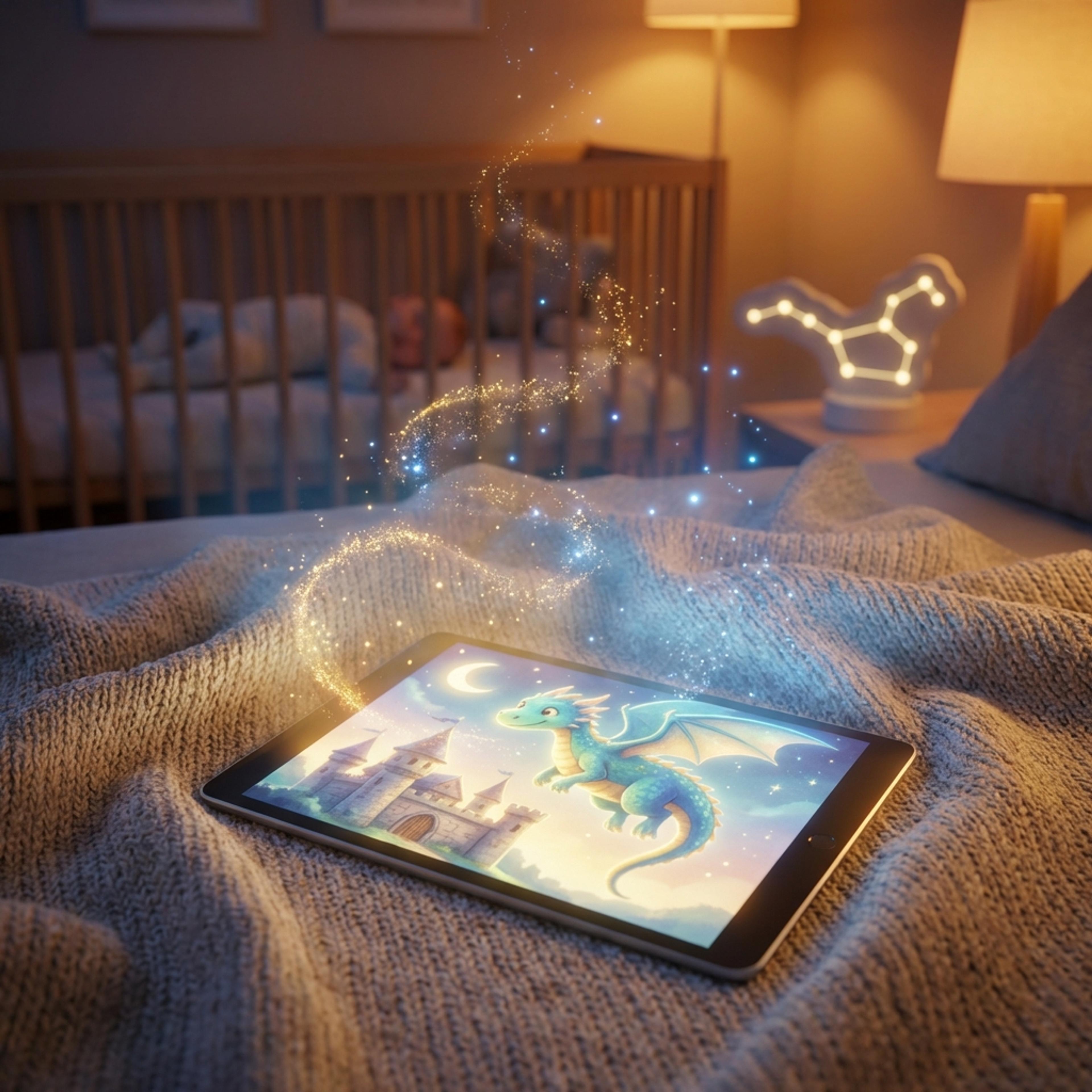
Turn your child's favorite characters into personalized audio adventures. Sign up for free and start your story today!
Get Started FreeMany parents turn to screen-free alternatives like the or . While these are excellent for reducing screen time, they rely on static content libraries. The story of 'Cinderella' is the same for every child. AudioFables, however, utilizes 'Active Identity Encoding.' By weaving your child’s name, their friends, and their specific daily challenges into the narrative, we trigger the SRE every single time. This doesn't just entertain; it builds and deep-focus skills that are often eroded by the fast-paced nature of modern digital media.
To get the most out of personalized storytelling, try these strategies:
1. Use Real-Life Challenges: If your child is struggling with sharing, make the story about them finding a magical way to share with their actual best friend.
2. Include Sensory Details: Mention the smell of their favorite dinner or the texture of their specific 'lovey.'
3. Consistent Heroism: Regularly placing your child in the role of the 'problem solver' builds their narrative identity and self-esteem.