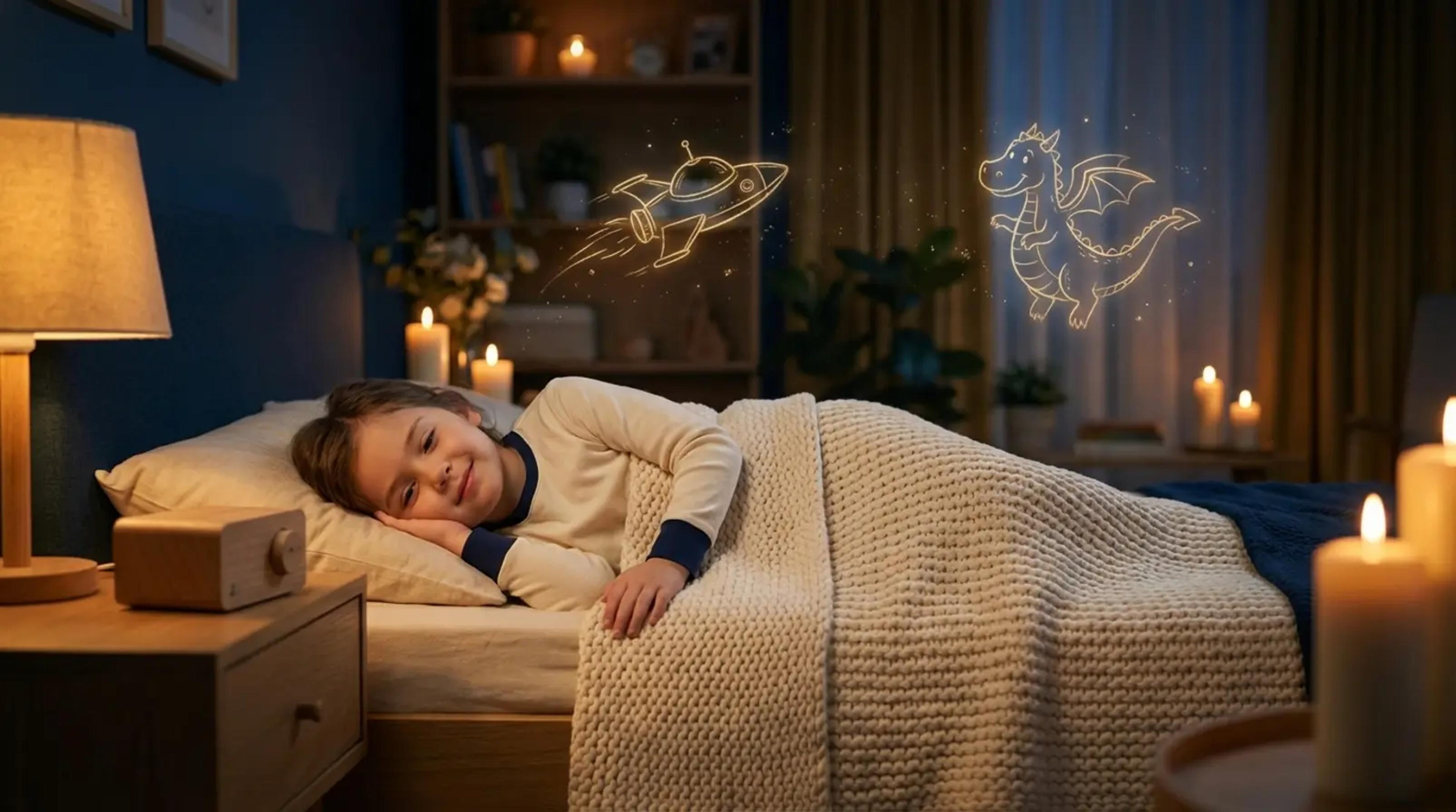
The Sensory-Safe Sleep Solution: Why Personalized Audio Stories are a Game-Changer for Neurodivergent Kids
•Written by AudioFables Team
Key Takeaways:
► Predictable auditory patterns help regulate the nervous system.
► Personalization leverages 'hyper-fixations' to maintain focus without overstimulation.
► Screen-free audio avoids blue light, supporting natural melatonin production.
► Placing the child as the 'hero' aids in processing intense daily emotions.
For many parents of neurodivergent children—whether they have ADHD, Autism, or Sensory Processing Disorder—the 8:00 PM transition isn't just a routine; it’s a high-stakes emotional hurdle. Executive dysfunction makes switching from 'play mode' to 'sleep mode' incredibly difficult. Traditional bedtime methods often fail because they don't account for the unique sensory needs of a neurodivergent brain.
Neurodivergent kids often experience the world more intensely. At night, the absence of daytime distractions can lead to a 'sensory vacuum' where every small noise or internal thought feels magnified. This often leads to emotional dysregulation and bedtime resistance. Standard sleep stories, while calming for some, often lack the specific engagement required to ground a wandering mind.
Turn your child's favorite characters into personalized audio adventures. Sign up for free and start your story today!
Get Started FreeThis is where personalized audio storytelling creates a breakthrough. Unlike generic apps like Moshi or fixed-media tools like the Toniebox, personalization allows you to weave your child’s current 'hyper-fixations'—those intense, specific interests like space travel, dinosaurs, or ancient history—directly into the narrative.
By incorporating these interests, the story becomes a 'sensory anchor.' It provides enough dopamine to keep the brain engaged, but because it is audio-only, it doesn't trigger the cortisol-inducing excitement of a screen. This helps in and creating a predictable, safe environment for the nervous system to downshift.
For children who often feel 'out of sync' with the world, being the hero of their own bedtime story is transformative. Personalized narratives on AudioFables allow them to solve problems and practice social-emotional skills in a low-stakes, imaginary world. This builds the they need to face tomorrow’s challenges.