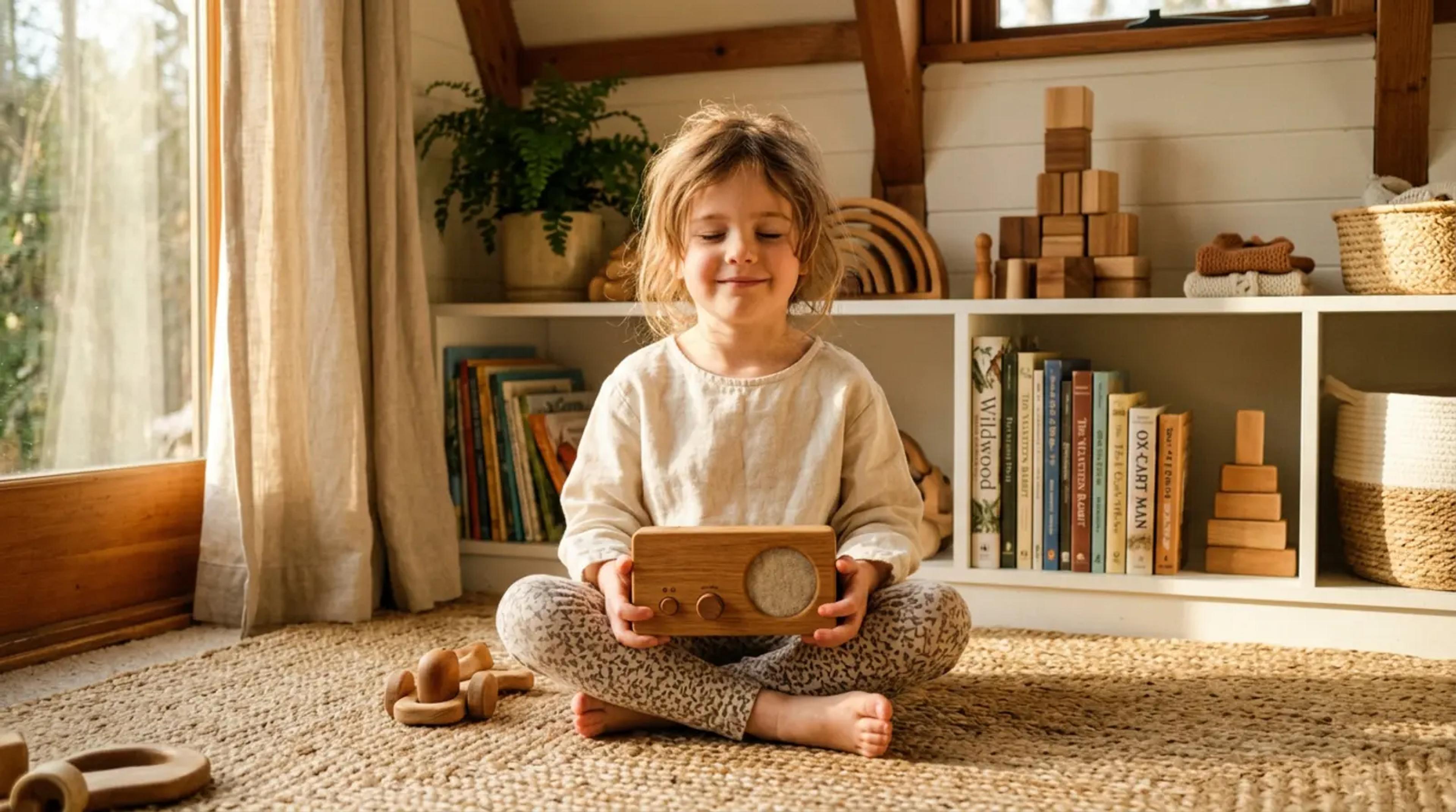
The 'Slow-Tech' Sanctuary: Supporting the 2026 Pivot to Play-Based Childhood
•Written by AudioFables Team
Key Takeaways:
► The 2026 'Analog Pivot' prioritizes screen-free, play-based childhoods.
► Audio stories provide 'narrative scaffolding' for independent play.
► Personalized content reduces overstimulation compared to algorithm-driven apps.
► AudioFables offers a deeper emotional connection than physical card-based players.
We are currently witnessing a massive cultural shift in parenting. Dubbed the 'Analog Pivot' of 2026, more families are moving away from the 'Fast-Tech' of tablets and TikTok. Inspired by the insights of Jonathan Haidt’s 'The Anxious Generation,' parents are reclaiming the audio sanctuary of a phone-free childhood. The goal? To return to a play-based childhood where imagination, not an algorithm, takes the lead.
Slow-Tech isn't about being anti-technology; it’s about being pro-intention. While 'Fast-Tech' is designed to hook the dopamine system with instant gratification, Slow-Tech tools support cognitive development. Auditory storytelling is the ultimate example. It provides what experts call 'narrative scaffolding'—enough stimulus to keep a child engaged without doing the 'visual heavy lifting' for them.
Turn your child's favorite characters into personalized audio adventures. Sign up for free and start your story today!
Get Started FreeMany parents start their screen-free journey with devices like the . While these are great entry points, they often lead to a 'collector culture' of plastic figurines and static content. AudioFables represents the next step in the Slow-Tech evolution. By using high-end AI to create stories where your child is the hero, we solve the 'Main Character' drive of Gen Alpha in a safe, intentional way.
One of the biggest hurdles in a play-based childhood is the 'I'm bored' phase. Personalized audio acts as a . When a child hears a story tailored to their current interests—perhaps a mission involving their favorite stuffed animal—they are naturally drawn into open-ended play, building the executive function needed to tolerate non-instant gratification.
As we move through 2026, the goal is to reduce overstimulation and reclaim our children's attention spans. By choosing personalized audio over passive screens, you aren't just filling the silence—you're building a sanctuary for their imagination to thrive.