The 'Attention-Residue' Reset: Why Personalized Audio Stories are the Best 'Circuit Breaker' for a Screen-Heavy Childhood
•Written by AudioFables Team
Key Takeaways:
► Attention residue is the 'cognitive glue' that keeps a child's brain stuck on a screen task long after the device is off.
► Generic audio content often lacks the 'hook' needed to break high-dopamine digital loops.
► Personalized hero-narratives act as a cognitive 'circuit breaker' by engaging the auditory visualization network.
► Using these stories as a transition tool significantly reduces post-screen irritability and meltdowns.
Have you ever noticed how your child seems 'not quite there' after putting down the iPad? Maybe they are irritable, unusually clumsy, or struggle to follow simple instructions. In the world of cognitive science, this isn't just a bad mood—it's a phenomenon called 'Attention Residue.' Coined by Dr. Sophie Leroy, it describes how a part of our cognitive capacity stays 'stuck' on a previous task, preventing us from fully engaging with the next one.
For children in 2025, this is the 'Digital Hangover.' When they move from a high-stimulation game like Roblox or a fast-paced YouTube video to the 'boring' reality of dinner or bedtime, their brain is still processing the unfinished digital loops. To fix this, we need more than just 'screen-free time'; we need a deliberate nervous system reset.
Turn your child's favorite characters into personalized audio adventures. Sign up for free and start your story today!
Get Started FreeMany parents turn to or Yoto to bridge this gap. While these are excellent tools for screen-free entertainment, they sometimes struggle to compete with the 'attention residue' left by modern apps. Why? Because generic stories are passive. A brain that has just been the 'commander' of a digital world finds it hard to suddenly become a silent listener to a story about a generic bunny.
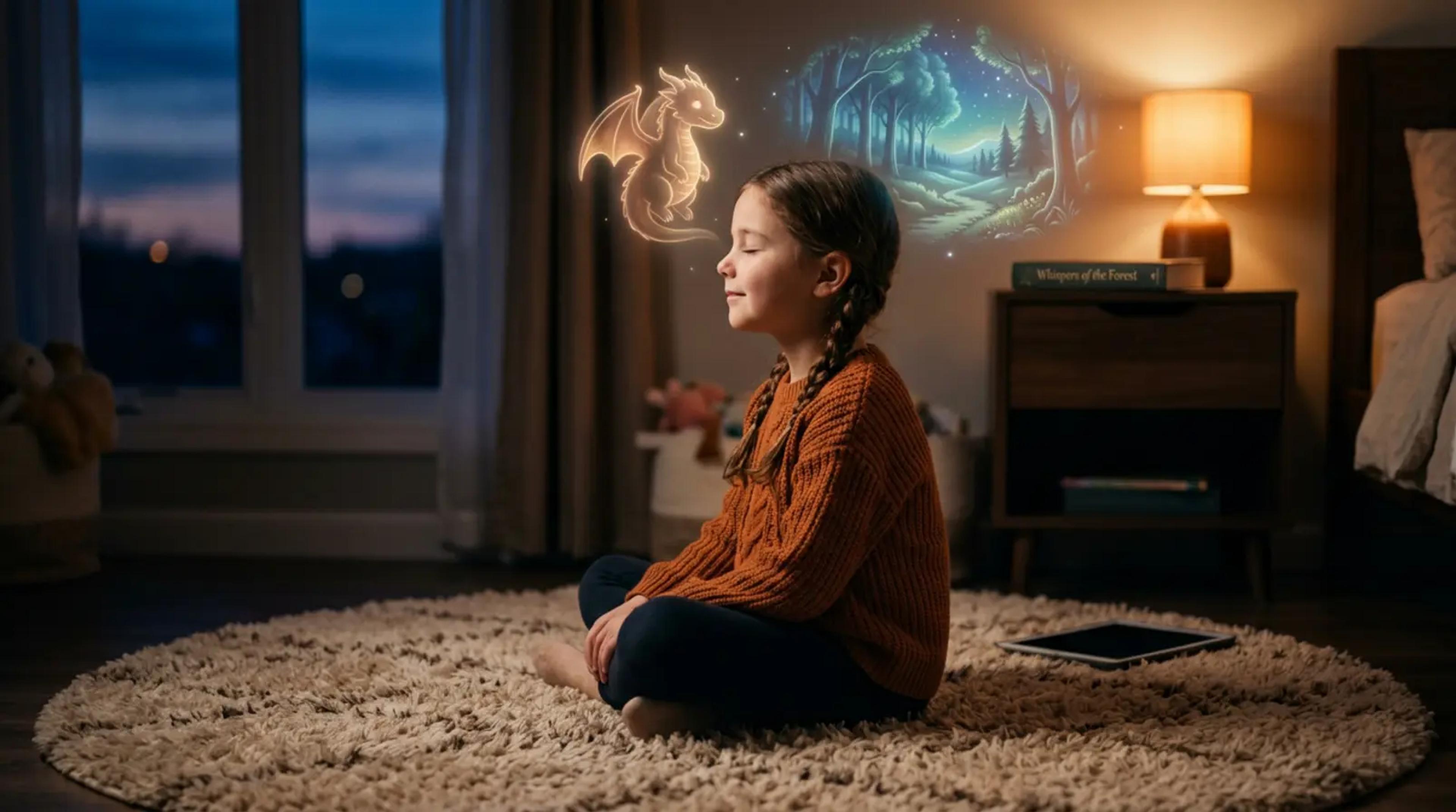
This is where AudioFables changes the game. By using AI to place your child at the center of the narrative, we create a 'Hero Identity' that acts as a powerful cognitive anchor. This isn't just entertainment; it's a . When a child hears their own name and their own interests woven into a story, their brain switches from 'passive consumption' to 'active auditory visualization.'
This process builds what we call . By forcing the brain to generate its own imagery, it effectively 'overwrites' the visual residue of the screen. It pulls the cognitive resources away from the digital world and anchors them back into the child's own imagination.
To implement an 'Attention-Residue' Reset tonight, try this: 10 minutes before screen time ends, tell your child they are going to create their own mission on AudioFables. Once the screen is off, immediately start the personalized story. Watch as the 'internal frame rate' of their mind slows down, transitioning them from digital chaos to a of peace and creativity.