
Moonlite vs. AudioFables: Why Personalized Audio Beats Phone-Based Story Projectors
•Written by AudioFables Team
Key Takeaways:
► Moonlite requires a smartphone, introducing blue light and potential digital distractions into the bedtime routine.
► AudioFables promotes 'auditory visualization,' a key cognitive skill for future reading comprehension.
► Personalized AI stories adapt to your child's life, whereas projectors rely on static, pre-purchased reels.
► Audio-only platforms allow for true independence, helping children fall asleep without parent-led manual interaction.
As parents, we are constantly searching for that 'magic' tool to make bedtime smoother. For many, the Moonlite Storybook Projector seems like a dream come true: it turns your phone into a theater. But as we look closer at the needs of a developing child, the limitations of phone-based projection become clear. While Moonlite is a fun novelty, it keeps the very thing we’re trying to avoid—the smartphone—at the center of the ritual.
Moonlite is inherently phone-dependent. To use it, you must clip the projector to your smartphone, open an app, and use the flashlight. This means your child is staring at a wall illuminated by your phone's light source, while you are reading text off a glowing screen. This setup risks blue light exposure and the constant threat of a notification popping up and breaking the spell. Transitioning to a truly audio sanctuary allows the brain to produce melatonin naturally, undisturbed by digital glare.
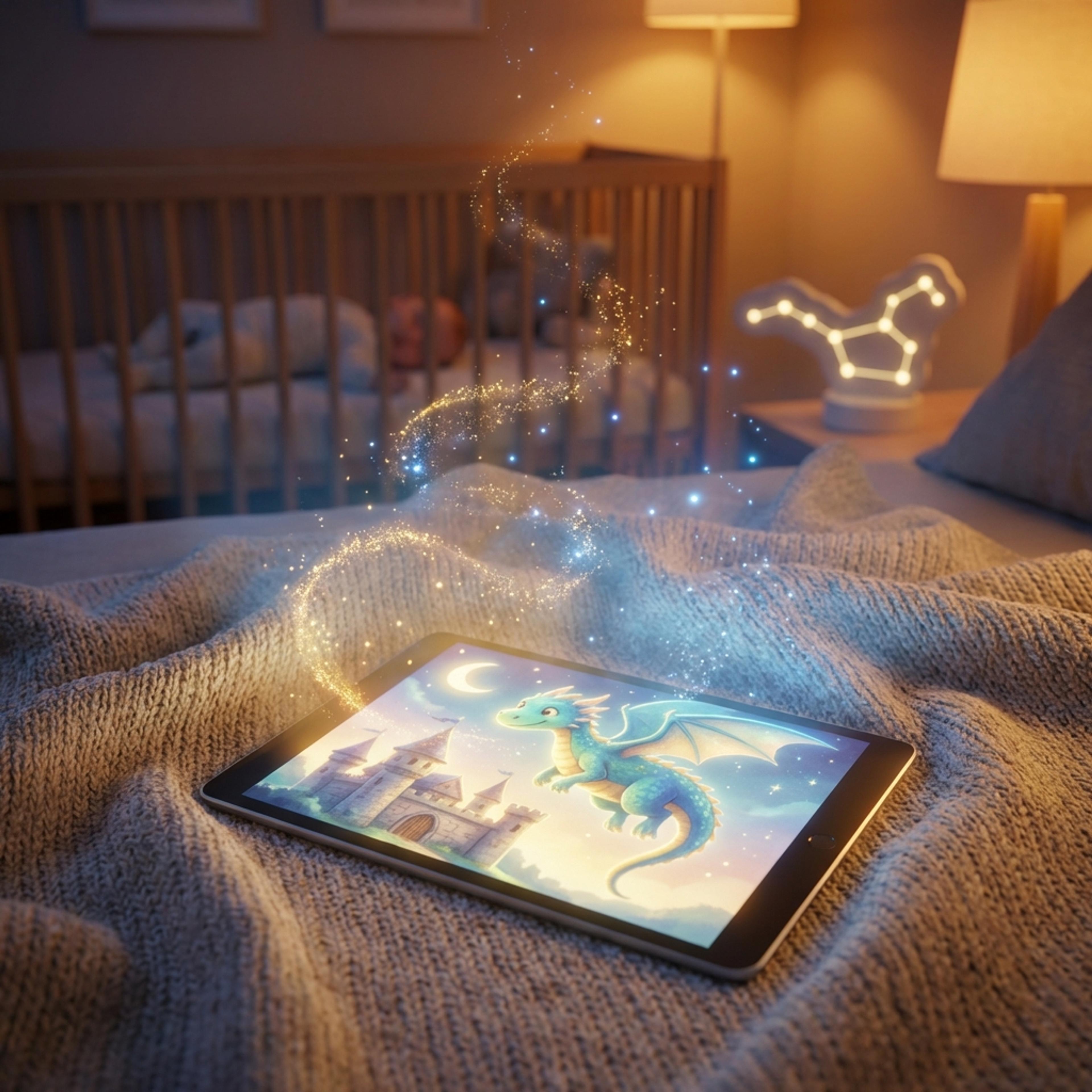
Turn your child's favorite characters into personalized audio adventures. Sign up for free and start your story today!
Get Started FreeOne of the most significant differences lies in cognitive engagement. Moonlite provides the 'mental movie' for the child. They look at the projection, much like a television screen. In contrast, AudioFables utilizes the . When a child listens to a story without visuals, their brain must work to create the images. This 'auditory visualization' is a critical precursor to reading comprehension and creative thinking. By removing the projector, you aren't taking away the magic; you're teaching your child how to create it themselves.
Moonlite relies on physical reels. If you want a new story, you have to buy a new reel ($10+ each). These can be lost, scratched, or simply grown out of. AudioFables offers an infinite library because it uses AI to generate stories based on your child’s specific interests, toys, and even daily challenges. This ensures that the content is always relevant, deeply engaging, and grows with your child, rather than being limited to a static catalog of 'classic' titles.
Finally, Moonlite is a parent-led activity. You must be there to turn the reel and read the app. While bonding is great, many parents struggle with the where a child cannot settle without constant interaction. AudioFables allows you to start a story and then set the phone aside (or use a Bluetooth speaker). The child can listen independently as they drift off, fostering a sense of security and autonomy that a manual projector simply cannot provide.